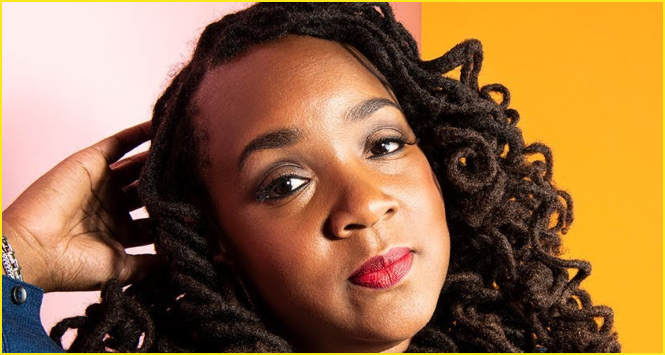
Danielle Moodie warns that the controversy over the Epstein files reveals a deeper, more uncomfortable truth: America protects powerful men far more than it protects women and girls.
In a blistering Instagram video, Moodie said the latest disclosures — which detail a web of wealthy, influential men connected to Jeffrey Epstein — should “ring alarms for everyone” about how little the country values the safety of vulnerable women and minors.
Her argument was not about a single document or a single name. It was about a pattern.
“This entire situation… goes to show me that we care very little about women and girls,” Moodie said. “It is so obvious in the policies we pass. It’s so obvious in the things we let slide.”

A Culture That Looked Away
Moodie pointed to years of public behavior, comments and allegations involving Donald Trump — all widely reported — that were often laughed off, minimized, or shrugged away.
She cited Trump openly bragging about walking in on teenage pageant contestants backstage, boasting about grabbing women without consent, and making sexualized comments about his own daughter — moments the public either dismissed or quickly forgot.
Mainstream media “chuckled,” she recalled. Voters moved on.
“So what is the smoking gun we’re even looking for?” Moodie asked. “What more confirmation do people need?”
Her argument is not simply about Trump, but about the cultural reflex to excuse or justify powerful men’s actions — even when patterns of misconduct appear in plain view.
A long list of men, a longer trail of protection
The newly released documents reference a mix of men in Epstein’s orbit — some mentioned peripherally, others more directly — including Prince Andrew, Larry Summers, and Deepak Chopra, among others. Many of the men have denied wrongdoing, and several have never been accused of a crime.
But Moodie’s point is not to relitigate individual names. It’s to call out a system in which money and status often mean insulation, silence, and protection.
“What all these different men have in common… is their power,” she said. “We just give carte blanche to men in power with money because that’s what we worship.”
Moodie said the problem extends beyond individuals to the institutions that enable them — from political parties to religious communities to media ecosystems that treat allegations involving powerful men like minor inconveniences rather than public emergencies.
“We sell out girls. We sell out women.” she said. “They’ve made big business off this — and even bigger business off the cover-up.”
Her comments echo what many survivors and advocates have long argued: that accountability is rare, systemic change is slow, and the cultural instinct is to protect the influential rather than the vulnerable.
A Society Still Not Ready to Protect Women and Girls
The Epstein scandal is often framed as a story about one predator and his inner circle. But Moodie insists the bigger story is about the conditions that allowed such an operation to thrive — and about the collective willingness to ignore, excuse, or rationalize harm when the accused sits high enough on the social ladder.
“Until we actually give a damn about women and girls… this will continue,” she said. “Plain and simple.”
The documents may answer some questions, but they also revive an older one — one American society has been reluctant to confront:
Why do so many powerful men get so many chances, and why do so many women and girls get so few?