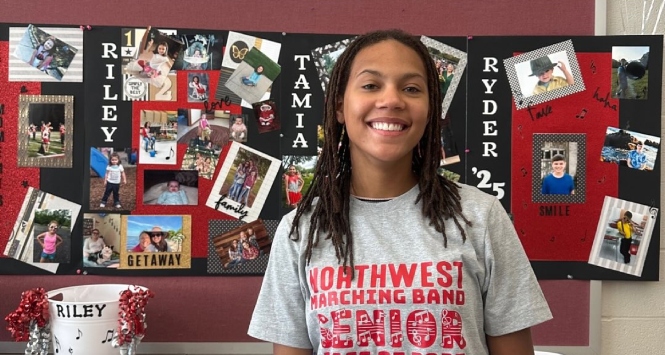
An incoming freshman at Howard University, Tamia Akers, has already lived through more than most teens her age.
The Ohio native spent years in foster care before being adopted, and she was the only Black student at her school from fifth through twelfth grade.
But now, just weeks before she’s set to begin classes at the historically Black university of her dreams, Akers faces a new and unexpected obstacle: how to pay for it.

Earlier this month, President Donald Trump signed The One Big Beautiful Bill Act, a sweeping education policy overhaul that dramatically alters how students and families finance college. The law imposes strict limits on Parent PLUS Loans and eliminates most federal loan repayment plans — changes that experts say will disproportionately impact low-income families and Black students.
For Akers, the news couldn’t have come at a worse time.
“I think I’m going to get up and run at it because I was begging for this chance,” Akers told WUSA9. “If you give me the money, I’ll apply. If you let me in, I’ll go. If I gave up every time an obstacle was thrown at me, I wouldn’t be where I am now.”
Akers’ path to Howard was fueled by grit and generosity. When she couldn’t afford the college application fee, a friend’s mother stepped in and paid it for her. Her determination paid off — she earned admission to Howard along with \$20,000 in scholarships from the university, her community in Ohio, and local organizations.
But it’s not enough. And with federal loan support now scaled back, she’s unsure how she’ll make up the difference.
The Parent PLUS Loan, long a financial lifeline for families who can’t cover the full cost of college, has been effectively gutted under the new law. Combined with the phase-out of income-driven repayment plans, the legislation threatens to derail college dreams for thousands like Akers.
Still, she remains determined to find a way.
“I’ve faced so much already — I won’t let this stop me,” she said.
Education advocates warn that The One Big Beautiful Bill Act could widen racial and economic disparities in higher education. And with the fall semester fast approaching, students like Akers are left scrambling.
Her story, however, is not just one of adversity — it’s one of relentless hope and unshakable belief in the power of education.