
A fiery media clash erupted online recently after former MSNBC host Joy Reid issued a blistering on-air response to ESPN commentator Stephen A. Smith.
Reid is accusing Smith of using his platform to demean Black women while benefiting from corporate structures that reward such commentary.
The exchange, shared widely after being posted by attorney and commentator @lawyerbaeesq on Instagram, began when, in an earlier broadcast, Smith criticized Reid’s declining ratings and suggested that her supporters should have “kept her 1.4 million viewers” to help her stay competitive.
Smith argued that discussions about race in media must be backed by “evidence,” adding that he was “qualified” to comment because of his experience navigating TV ratings and audience retention.
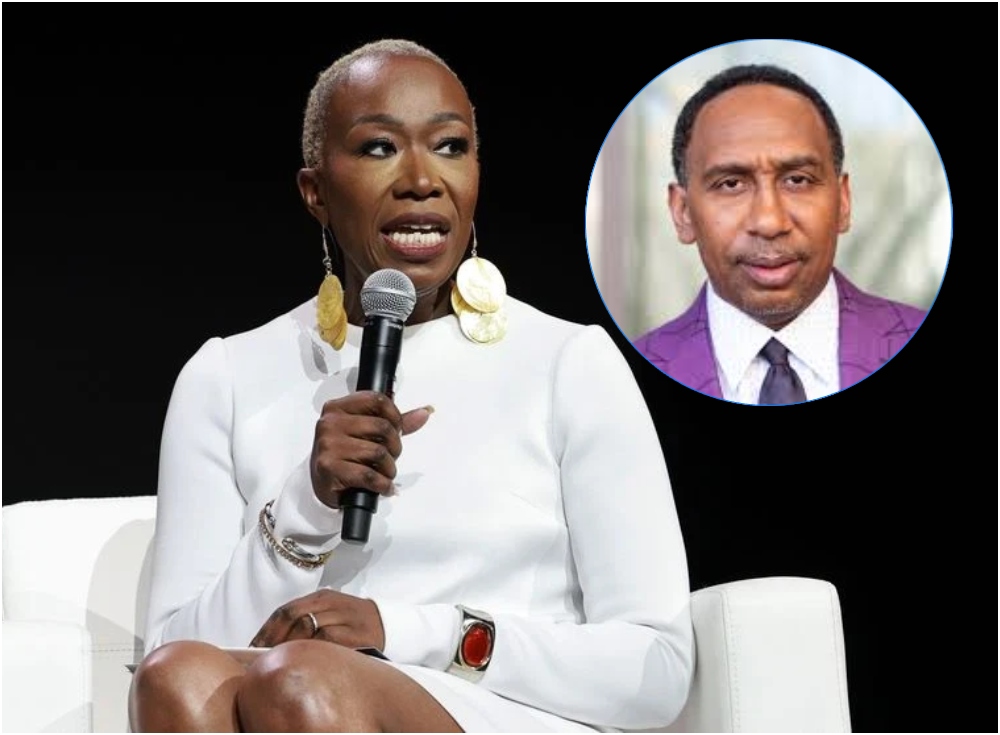
But Reid’s rebuttal—sharp, personal, and unapologetically direct—quickly became the center of the conversation.
“Excuse me, sir,” Reid said, pointing out that Smith has secured a $100 million deal despite drawing an audience “half my ratings at my worst.” She noted she had to “Google his numbers,” only to find that his radio show draws roughly 500,000 listeners—“average CNN,” she quipped.
Reid’s argument went far deeper than viewership math. She accused Smith of being rewarded by predominantly white executives not for audience performance, but for being willing to say publicly what they cannot.
“They’re paying you not for your numbers, my friend,” Reid said. “They’re paying you because you are willing to say the nasty things about Black people they want to say.”
She continued by alleging that Smith is being elevated because he places “the denigration of Black women into a Negro’s mouth,” a dynamic she said allows companies to avoid direct accountability while still benefiting from inflammatory rhetoric.
Her message ended with a pointed warning: “Don’t come for my friends… Don’t devalue Black women in front of Black women who can see and hear you.”
The clash highlights a growing tension within Black media circles: the extent to which high-profile personalities are empowered—or encouraged—to critique their own communities in ways that may benefit corporate interests more than audiences.
For many viewers, Reid’s viral clapback tapped into long-standing frustration over how Black women are treated in media spaces and the double standards they face around audience metrics, “likability,” and on-air conduct.
Whether Smith will respond remains to be seen, but the discourse has already sparked broader conversations about representation, power, and the economics of televised opinion.

