
Veteran North Carolina legislator Carla Cunningham has officially changed her party affiliation to unaffiliated following her recent primary election loss, marking a significant shift in her political trajectory after years as a Democrat.
Cunningham, a seven-term incumbent representing Mecklenburg County, was defeated in the March primary by Rodney Sadler, a pastor and educator who secured the backing of Governor Josh Stein.
The move was first reported by WBT and comes amid growing tensions between Cunningham and members of her former party.
Controversy and Political Fallout
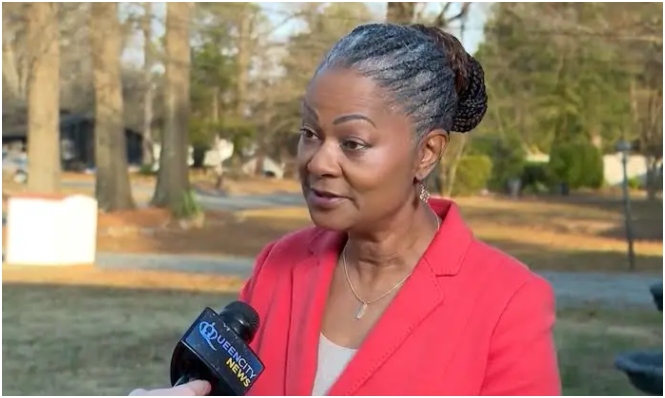
Cunningham’s relationship with Democrats had become increasingly strained in recent months, particularly after she voted to override a gubernatorial veto on legislation requiring sheriffs to cooperate with federal immigration authorities, including U.S. Immigration and Customs Enforcement.
Her decision sparked backlash within her party, especially following remarks she made on the House floor suggesting that immigrants should assimilate and stating that “all cultures are not equal.”
The vote positioned her at odds with Democratic leadership and many within her constituency, contributing to a contentious political environment leading up to the primary election.
“I Vote My Conscience”
In a recent interview, Cunningham defended her legislative approach, emphasizing independence over party alignment.
“It’s not beneficial for me to line up behind a party agenda,” she said, adding that her priority has always been serving her constituents rather than adhering to partisan expectations.
Describing her philosophy as pragmatic, Cunningham characterized her work in government as “transactional,” signaling that her future decisions, particularly in upcoming legislative sessions, will continue to be guided by her own judgment rather than party directives.
Part of a Broader Trend
Cunningham’s departure from the Democratic Party follows a similar move by Tricia Cotham in 2023, when Cotham switched parties and joined Republicans—an action that significantly altered the balance of power in the state legislature by giving Republicans a veto-proof majority.
While Cunningham’s switch to unaffiliated does not immediately shift legislative control, it underscores ongoing divisions within party ranks and highlights the increasing number of lawmakers distancing themselves from traditional party structures.
What Comes Next
As an unaffiliated lawmaker, Cunningham’s role in future legislative sessions could become less predictable, particularly on contentious issues where party unity is critical.
Her shift also raises questions about the evolving political landscape in North Carolina, where internal divisions and ideological differences continue to reshape party dynamics.

