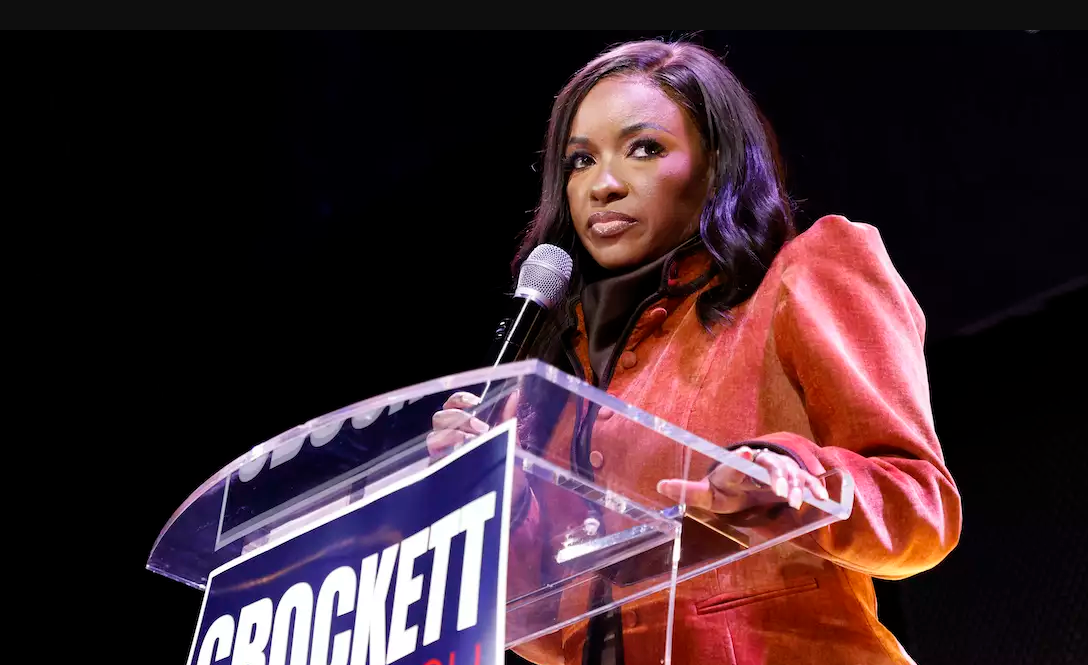
Congresswoman Jasmine Crockett’s loss in the Texas Democratic Senate primary was more than a campaign defeat. It underscored a deeper concern about how few voices in Washington are willing to confront the administration of Donald Trump directly and advocate forcefully for the communities most affected by its policies.
In a recent editorial piece for The Black Wall Street Times, writer Alexanderia Haidara examines how Crockett represented a rare presence in national politics: a visible and outspoken defender of civil rights, economic opportunity, and fair immigration policies. Her loss comes at a moment when Democrats remain politically defensive and uncertain about how to counter the administration’s agenda. It also raises broader questions about leadership within the party and whose voices are elevated during moments of political crisis.
Crockett’s Senate run was shaped by structural forces beyond a typical campaign calculation, Haidara argues. Redistricting and court rulings effectively pushed her out of her congressional district, forcing a statewide race in a challenging political environment. Still, her defeat has left supporters wondering who will fill the leadership space she occupied.
For Black voters, the moment feels familiar, she continued. Black women have long served as one of the Democratic Party’s most reliable voting blocs and grassroots organizers, yet their political influence does not always translate into lasting leadership roles. The dynamic echoes earlier chapters in American political history, from the barriers faced by civil rights leaders like Fannie Lou Hamer and Shirley Chisholm to more recent debates surrounding figures such as Stacey Abrams and Kamala Harris.
Beyond symbolism, Crockett’s absence matters because of the policy fights she helped elevate, Haidara writes. She was among the most vocal critics of efforts to dismantle the United States Agency for International Development and warned that weakening development programs would erode American influence abroad. She also spoke out against attacks on diversity initiatives and education programs.
Her defeat reinforces a longstanding paradox within the Democratic coalition, the writer concludes. Black women are central to the party’s electoral success, yet they remain underrepresented in its highest leadership positions. For Democrats trying to rebuild a broad multiracial coalition, Crockett’s loss is not just the end of a campaign. It is a warning about the gap between political loyalty and political power.