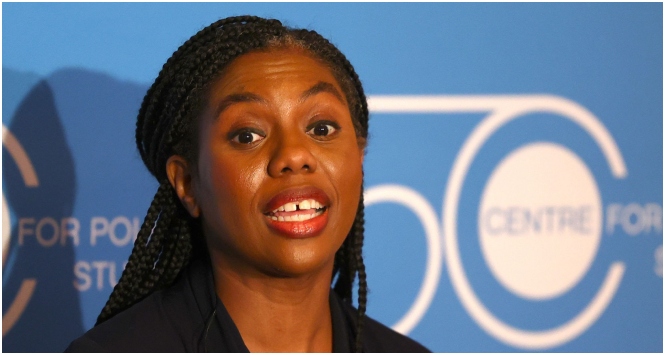
UK Conservative Party leader Kemi Badenoch has sparked debate after revealing she no longer identifies as Nigerian, citing a lifelong connection to Britain over the West African country of her ancestry.
Speaking on the Rosebud podcast hosted by former MP Gyles Brandreth, Badenoch said that while she is “Nigerian through ancestry,” her identity is now rooted entirely in the UK.
“By identity, I’m not really [Nigerian],” she said. “Most of my life has been in the UK, and I’ve just never felt the need to renew my Nigerian passport.”
Badenoch, 44, was born in Wimbledon, England, and raised in both the United States and Nigeria before returning to the UK at the age of 16. Her family’s decision to leave Nigeria was due to what she described as a deteriorating political and economic climate and a lack of future opportunities.
“It was that my parents thought: ‘There is no future for you in this country,’” she recalled. “I remember never quite feeling that I belonged there.”
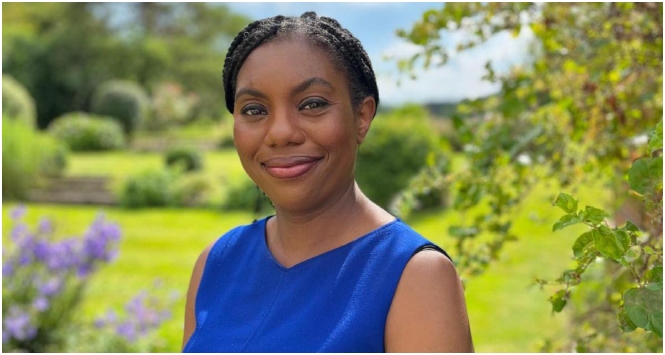
Though she previously lived in Lagos and maintains strong family ties to Nigeria, Badenoch said her life experience has shaped a distinctly British identity.
“Home is where my now family is,” she explained. “When I came back to the UK in 1996, I remember thinking: this is home.”
Her remarks come amid ongoing tension between Badenoch and Nigerian officials. Last year, Nigerian Vice President Kashim Shettima accused her of “denigrating her nation of origin” following comments she made about growing up in fear and insecurity due to corruption in Nigeria.
Badenoch rejected the criticism, defending her right to speak openly about her experiences.
She also highlighted how her early life in Nigeria influenced her political views—particularly her opposition to socialism.
“My experiences growing up there shaped why I don’t like socialism,” she said. “You could see the damage bad governance did in real time.”
Despite anticipating racial differences upon her return to the UK, Badenoch said her experiences with racism were minimal.
“I knew I was going to a place where I would look different to everybody, and I didn’t think that that was odd. What I found actually quite interesting was that people didn’t treat me differently,” she said.
“It’s why I’m so quick to defend the UK whenever there are accusations of racism.”
The minister’s statements have ignited discussion online and within diaspora communities about national identity, race, and the complexities of belonging for second-generation immigrants.
Badenoch, a prominent figure in the Conservative Party often mentioned as a potential future Prime Minister, is currently Secretary of State for Business and Trade.
Her comments underscore a growing debate in Britain around multiculturalism, loyalty, and how immigrants and their children navigate dual heritage in public life.