The assassination of conservative commentator Charlie Kirk has ignited a national debate about race, privilege, and the risks of speaking out.
Clinical psychologist Dr. Dana E. Crawford, in a widely shared Instagram video, said Kirk’s killing has left many white Americans “grieving and shaken,” not only because of his political influence but because, for the first time, they witnessed a white man killed for his speech. Crawford described the reaction as an example of moral displacement and racialized justice.
“For Black people, Indigenous people, and communities of the global majority, speaking out has always carried the risk of death,” Crawford explained, pointing to figures such as Martin Luther King Jr. and Fred Hampton. “Justice wasn’t an abstract debate, it was survival.”
She contrasted that history with the experiences of many white communities, for whom justice was primarily argued in courtrooms, classrooms, or protests—rarely linked to fatal consequences.
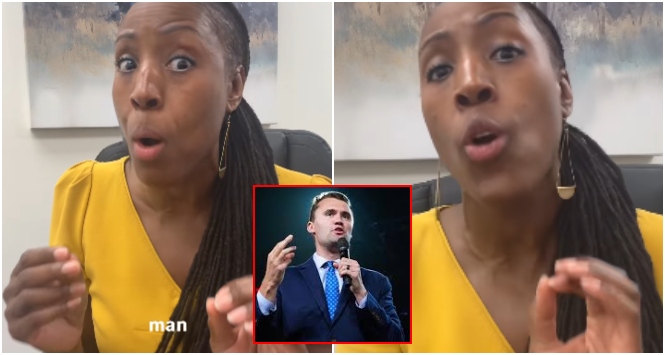
According to Crawford, Kirk’s assassination disrupted a long-held assumption that whiteness provides immunity from such violence. She noted that his death unsettled not only white audiences but also some people of color who sought safety through assimilation into anti-Black structures.
“They thought if they agreed and assimilated into anti-Black culture, they would be safe,” Crawford said. “So why does white death spark outrage when Black death so often meets silence or blame? Let’s name a thing a thing.”
The broader conversation, amplified by Crawford’s remarks, has forced uncomfortable questions about whose suffering society acknowledges and whose it dismisses. Many see Kirk’s death as a turning point that exposes the fragility of privilege when confronted with politically motivated violence.
Kirk, the founder of Turning Point USA, was assassinated on Sept. 12, 2025, in Phoenix, Arizona. Authorities said the 31-year-old commentator was leaving a speaking engagement at a civic center when a gunman opened fire in the parking lot. Emergency crews rushed him to a nearby hospital, where he was pronounced dead from multiple gunshot wounds.
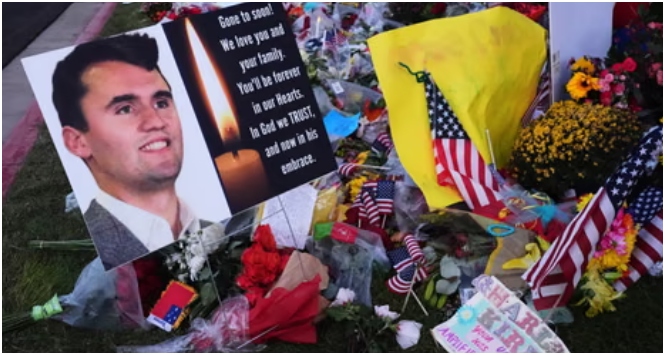
Police arrested the suspect hours later following a manhunt across the city. Federal prosecutors are reviewing the case, and investigators have not ruled out domestic terrorism charges.
The killing, which took place in a public venue tied directly to political expression, has sparked ongoing vigils nationwide as supporters and critics alike grapple with its implications for free speech, safety, and justice in America.