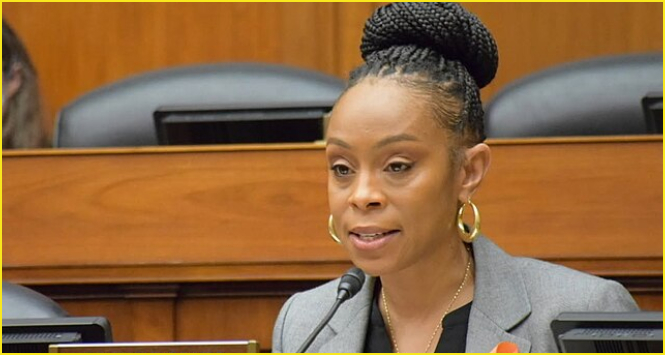
As the nation’s longest government shutdown finally came to an end on Thursday, Nov. 13, Ohio Congresswoman Shontel Brown (D-OH) made clear she wasn’t celebrating the bill that reopened Washington.
In a fiery Instagram post and accompanying video, Brown accused Republicans of advancing what she called “a sham spending bill” that does “absolutely nothing” to ease the financial strain on working families.
“No, I won’t be voting for their little sham spending bill,” Brown said. “Republicans have done nothing to lower prices — and the costs are just too high.”

Her criticism came hours before the House narrowly passed the funding measure, 222–209, largely along party lines. The legislation, signed into law by President Donald Trump late Wednesday, ended a 42-day shutdown that had crippled federal operations, delayed paychecks for hundreds of thousands of workers, and pushed many families who rely on SNAP and other programs to the brink.
The deal, brokered in the Senate after weeks of stalemate, extends funding at current levels through January and includes full-year appropriations for the Department of Veterans Affairs, the USDA and FDA, and legislative branch operations.
But for Brown and several progressives, the sticking point was clear: Democrats agreed to drop a key demand — an extension of Affordable Care Act (ACA) subsidies that help millions of Americans afford coverage.
“Republicans have refused to extend the ACA subsidies that help millions pay for coverage,” Brown said in her video. “That means families will pay more and people will lose care — all because this president and his party would rather protect tax breaks for the wealthy than protect your health care.”
She warned that half a million Ohioans are already seeing higher premiums during open enrollment and argued that GOP leaders have gutted programs critical to the middle class.
“They have done not one thing to lower health care costs, not one thing to make gas, goods, and groceries cheaper,” Brown said. “Instead, they’ve handed out permanent tax breaks to millionaires and billionaires while cutting Medicaid, SNAP, and clean energy projects that would’ve helped families.”
A Shutdown with Lasting Scars
The 42-day impasse, now the longest in U.S. history, left deep marks. Air travel was disrupted, small businesses lost contracts, and food banks across the country reported surges in demand from furloughed federal workers.
The political fallout is also significant. While the shutdown’s end brought some relief, Democrats remain divided on whether compromise came at too high a cost. Brown’s statement underscores a growing tension within her party — between moderates seeking to move government forward and progressives determined not to concede on core social priorities.
The Bigger Picture
The episode also highlights a defining contradiction in the current political moment: a government reopened but a governing philosophy still in gridlock.
Brown’s remarks serve as a reminder that the fight over affordability — from healthcare to housing to food — remains unfinished. The “sham bill,” as she calls it, may have restarted paychecks, but for millions of Americans still struggling with high costs, it’s a reminder that legislative deals don’t always translate into relief at the kitchen table.
In her closing line, Brown spoke not just to colleagues in Congress, but to voters watching from home:
“The time is now to fix this,” she said. “Because when prices go up and care goes down, it’s working people who pay the price.”