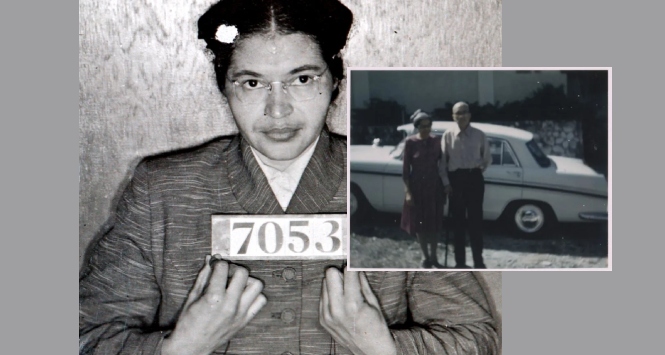
Every February, during Black History Month, the Rosa Parks story gets retold the same way. Rosa Parks was tired. Rosa Parks refused to give up her seat. Rosa Parks sparked a movement.
But there’s a detail that almost never makes it into textbooks or classroom discussions. One that changes how we understand that moment entirely.
Yes, Rosa Parks owned a car.
So why was she on that bus in Montgomery, Alabama, in 1955?
The answer matters more than you think.
According to records held by the Library of Congress, Raymond Parks, Rosa Parks’ husband, never owned a car during the Montgomery bus boycott. Rosa Parks herself did not purchase a vehicle until 1968, more than a decade after her arrest and long after she had moved to Detroit. The documentation includes a receipt for a two-door 1965 Ford dated April 25, 1968. Before that, the Parks household did not own a car.
Jeanne Theoharis, a Brooklyn College professor and one of the foremost scholars on Rosa Parks’ life, has been unequivocal on this point. She has noted that rumors about the Parks family owning a car were deliberately spread by segregationists during the boycott as a way to undermine its moral force. Income records, she points out, make it clear just how financially precarious their lives were at the time.
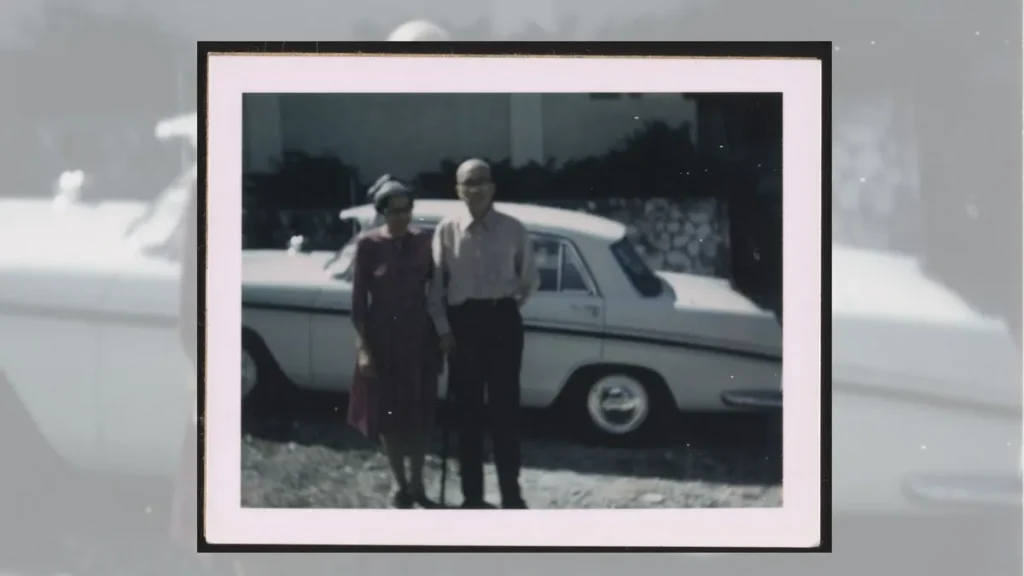
Yet the persistence of this rumor reveals something deeper than a factual dispute. It exposes how eager some people are to simplify, sanitize, or even discredit Black resistance.
Rosa Parks was never just a tired seamstress who happened to sit down on the wrong day. She was 42 years old. She was a trained activist. She served as the secretary of the Montgomery chapter of the NAACP and as its youth council leader. She had investigated cases of sexual violence against Black women long before her own arrest made headlines.
And still, that day on the bus was not a staged protest.
Parks herself made that clear. In her autobiography, she wrote that she was not physically exhausted. She was tired of giving in. At the time, civil rights leaders were searching for a legal test case to challenge segregation laws. Earlier that year, 15-year-old Claudette Colvin, a mentee of Parks, had been arrested for refusing to give up her seat. The NAACP ultimately decided not to center her case, believing the courts would be less sympathetic to a teenager.
When Parks was arrested on December 1, 1955, the moment caught the movement ready but not rehearsed.
The bus boycott that followed was initiated by the Women’s Political Council, a group of Black women organizers who moved quickly once Parks’ trial date was set. The one-day protest turned into a 13-month act of collective defiance that reshaped American history.
And here’s where the question of cars becomes meaningful in a different way.
During the boycott, cars became lifelines. Churches and community leaders organized elaborate carpool systems. Rosa Parks herself worked as a dispatcher, helping keep the network running. People walked miles. They shared rides. They built an infrastructure of resistance with what little they had.
So no, Rosa Parks did not own a car in 1955. Neither did her husband.
But even if she had, it would not erase the courage of her choice or the violence of the system she confronted!