
Veteran journalist Georgia Fort emerged from federal custody this week with a question she said should alarm every American: “Do we have a constitution or not?”
Fort, who has worked in media for more than 17 years, was released from a federal courthouse after being arrested in connection with a protest at a St. Paul church earlier this month. She was one of four people taken into custody over a 24-hour period at the direction of U.S. Attorney General Pam Bondi, alongside former CNN anchor Don Lemon, Trahern Jeen Crews, and Jamael Lydell Lundy.
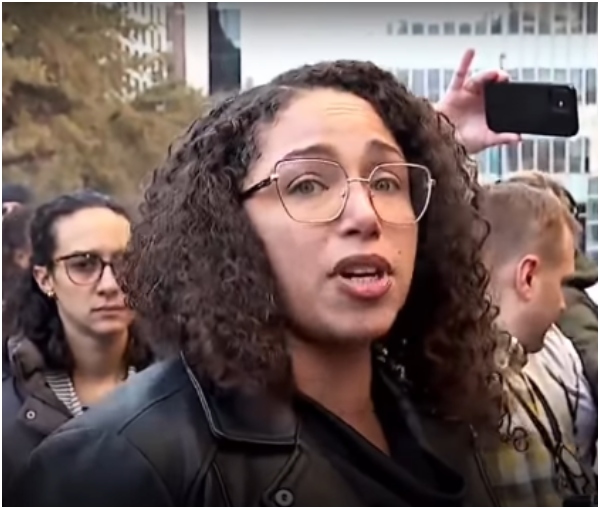
Speaking to supporters moments after her release, Fort framed her arrest not merely as a legal dispute, but as a direct challenge to constitutional protections for journalists.
“I should be protected under the First Amendment,” Fort said. “Just like all of the journalists who I’ve been advocating for.”
A Press Freedom Flashpoint
Fort said her detention comes amid months of what she described as the brutalization and targeting of journalists, including those working in mainstream media. Her remarks suggest growing concern within press freedom circles that new enforcement actions are blurring the line between journalism, protest coverage, and criminal liability.
“Amplifying the truth, documenting what is happening in our community is not a crime,” she said, underscoring that her role was to report on issues raised by concerned community members during the church protest.
While Fort declined to discuss details of the case due to ongoing litigation, she made clear that her commitment to reporting has not wavered.
“As a journalist, I am committed to continuing to follow the story until their questions are answered,” she said.
Arrests Raise Constitutional Questions
The arrests have sparked debate among civil liberties advocates, who argue that detaining journalists in connection with protests risks chilling press freedom and undermining First Amendment guarantees.
Fort’s framing — questioning whether constitutional protections are still being upheld — has resonated widely on social media, where her remarks have been shared as a rallying cry for media accountability and transparency.
Supporters who gathered outside the courthouse were thanked directly by Fort, who urged continued attention to the cases of the other defendants.
“Please continue to support the other people who are being charged,” she said.
Broader Implications
Legal analysts note that the case could become a significant test of how federal authorities interpret the boundaries between protest participation, observation, and journalistic activity.
At stake, critics say, is not only the fate of those charged, but the broader principle of whether journalists can safely document controversial or politically sensitive events without fear of arrest.
For Fort, the issue is already clear.
“That is the pressing question that should be on the front of everyone’s minds,” she said. “Do we have a constitution?”

