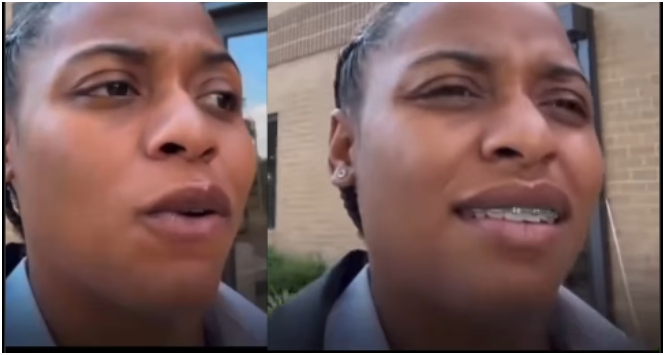
A viral social media video has ignited heated debate about race, privilege, and homelessness after a Black woman candidly stated that she refuses to give money to homeless white people.
The clip, which has been widely shared on Instagram by @theflyshikistv, has drawn thousands of reactions across platforms, reflecting broader conversations about structural inequities, racial bias, and personal responsibility in America.
“And to be honest with y’all, I don’t give homeless white people no money because how the fuck did you fuck up white privilege like that? Like, no, I only give it to my sisters and brothers. They’re the only ones that can fuck it up. We had it the hardest out here. I don’t care.”
Her remarks struck a nerve, with viewers sharply divided over whether her stance highlights uncomfortable truths about racial disparities or unfairly perpetuates discrimination.
A Divisive Reaction
Responses to the video ranged from support to outright condemnation.
Some commenters agreed with her point, suggesting that homelessness among white Americans raises questions about squandered privilege, while others argued that poverty has no race.
- One commenter wrote: “Homelessness has no color.”
- Another dismissed her comments as prejudice: “blackie thinks she said something.”
- Others contextualized the issue, pointing to immigrant communities who, despite hardships, often turn to informal entrepreneurship rather than panhandling. One comment read: “In NYC I have never seen a Mexican or migrants begging for money, they sell cut up fruit or juices they hustle. While Americans that have access to it all are the ones begging… make it make sense.”
- Some pushed back on all sides: “I don’t allow racism to affect my donations. I don’t give homeless people anything. You’re only supporting their addiction when you do.”
Broader Context: Homelessness and Privilege
The debate comes amid rising concerns over homelessness in the United States, which has reached record levels.
According to the U.S. Department of Housing and Urban Development’s 2023 Annual Homeless Assessment Report, more than 650,000 people were homeless on a single night in January 2023 — the highest figure since reporting began.
While Black Americans are disproportionately represented in homeless populations (making up roughly 13% of the U.S. population but over 37% of the homeless population), white Americans still account for the largest number of unhoused individuals.
Critics of the video argue that framing homelessness through the lens of “failed privilege” oversimplifies the systemic causes, which include mental illness, addiction, economic inequality, unaffordable housing, and healthcare gaps.
At the same time, others point to the viral comments as highlighting the frustration Black communities feel toward narratives of white privilege, particularly when they perceive that structural advantages are squandered or denied in public discourse.
Race, Class, and Compassion
The video taps into a larger cultural debate: how do race and privilege shape perceptions of who deserves help?
Some argue that compassion should not be filtered through identity, while others contend that giving is inherently personal and often tied to shared experience.
As the viral clip continues to spread, it underscores the complexity of America’s homelessness crisis — one that cuts across race, class, and politics — while also revealing the raw, unfiltered conversations happening online about privilege and responsibility.