
Pro-age speaker Barbara Brooks has shared a personal, emotional realisation about the often unspoken reality of growing older without a traditional support system.
In a video posted to Instagram, Brooks described sitting at a doctor’s appointment, learning she would need surgery, and confronting a truth that landed heavier than the diagnosis itself.
“The person who would be there for me… is in a home and unable to do that,” she said, speaking about her mother.
A Role Reversed
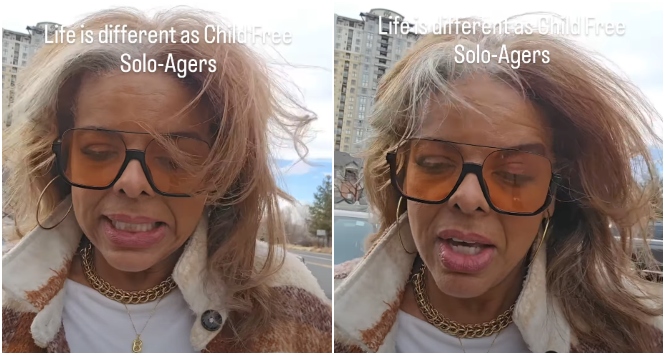
For Brooks, who identifies as child-free and a “solo-ager,” the moment was not just about medical logistics. It was about a shift, one that many experience but few articulate so plainly.
There was a time when her mother would have been the one by her side: driving her home, tending to her recovery, offering comfort in uncertain moments. Now, that role has quietly reversed.
“My emergency contact is no longer my mother,” she said. “Instead, I’m her emergency contact.”
It is a simple statement, but one layered with years of love, dependence, and change, marking the point where care begins to flow in the opposite direction.
The Space Between Independence and Vulnerability
Brooks does not talk about her reality as tragic. Instead, it carries a tone of acceptance, yet one that acknowledges the emotional weight of navigating life’s pivotal moments alone.
As she prepares for surgery, she will rely on friends or extended family for support. But the absence of that one person—the default, unquestioned source of care—creates a different kind of vulnerability.
For many solo agers, independence is a point of pride. But moments like these reveal its limits.
A Shared, Unspoken Experience
Her reflection has struck a chord with countless viewers, particularly those over 50 who are caring for aging parents while quietly confronting their own future needs.
It speaks to a broader, often invisible experience: the realization that the safety net of childhood—the person who always showed up—is no longer there in the same way.
And for those without children or partners, the question becomes more immediate: who steps in next?
Redefining What Support Looks Like
Brooks’ message does not dwell in fear, but in awareness. It invites a reframing of what support means later in life—not something assumed, but something intentionally built.
It also underscores the emotional complexity of this stage of life: gratitude for the parent who once carried you, paired with the reality that you now carry them—and yourself.
A Moment That Lingers
There is no dramatic conclusion in Brooks’ story—just a quiet recognition that life has shifted.
Not with loss alone, but with responsibility. Not with loneliness, but with a different kind of strength.
And in that moment at the doctor’s office, what surfaced was not just the need for surgery—but the understanding that some of life’s biggest transitions don’t announce themselves loudly.
They arrive in small, deeply personal realizations.
Like updating an emergency contact, and realizing what that truly means.

