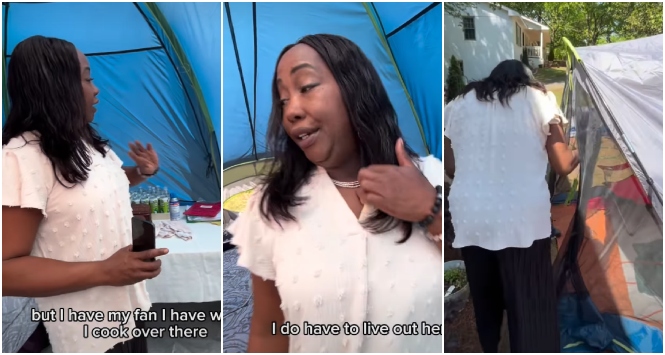
A housing dispute in Carroll County hit news headlines after a local renter claimed severe mold contamination inside her home forced her to move outdoors.
The woman has been living in a tent outside her home for the past two months to avoid the molds.
According to a report by WSB-TV, the woman says the conditions inside the rental unit have made it impossible for her to breathe safely, leaving her with no choice but to set up a makeshift living space outside.
“I have to live out here,” she said, describing a daily routine that now includes cooking, sleeping, and sheltering in a tent. “I don’t want to live out here,” she added.
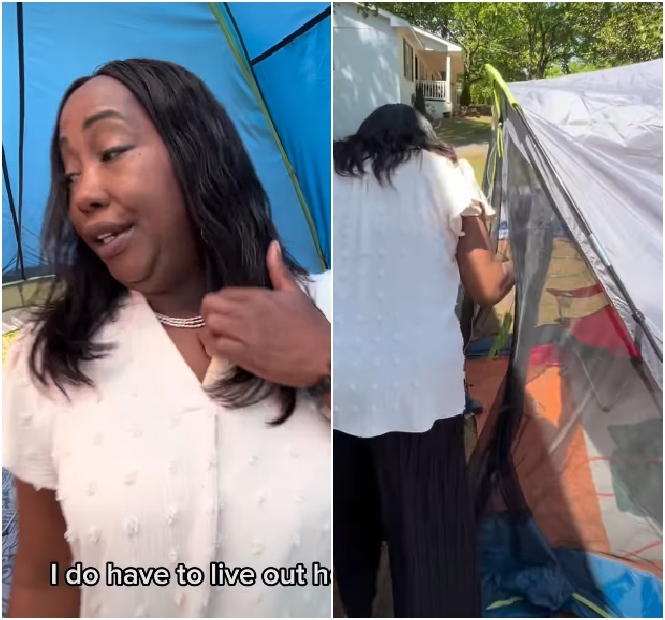
The dispute centers on conflicting claims about the safety of the property. While the tenant alleges a “severe mold infestation” posing serious health risks, the property owner maintains that the unit is safe for occupancy.
The disagreement has escalated into a legal battle, with both sides reportedly relying on inspection findings and documentation to support their positions.
Mold exposure is widely associated with respiratory issues and other health concerns, making such cases particularly sensitive when habitability standards are in question.
Legal experts note that cases like this often hinge on local housing codes and the doctrine of “implied warranty of habitability,” which requires landlords to maintain rental properties in livable condition.
If proven, significant mold contamination could constitute a violation, potentially entitling tenants to remedies such as repairs, rent withholding, or lease termination.
However, landlords may counter with their own inspections or remediation efforts to demonstrate compliance, creating a complex evidentiary dispute.
As the case unfolds, it highlights broader concerns about tenant protections, landlord accountability, and public health in rental housing.
For now, the renter remains in her outdoor setup, awaiting the outcome of a legal process that could determine not only her living conditions but also the responsibilities of property owners in similar situations.