
Illinois has become the first state in the nation to create a financial assistance program specifically for residents who lose federal SNAP benefits, a move anti-hunger advocates are calling a landmark victory in the fight against food insecurity.
The historic measure, included in Illinois’ newly approved FY27 state budget, establishes the Families Receiving Emergency Support for Hunger (FRESH) program, which will provide a one-time $400 payment to eligible residents who lose Supplemental Nutrition Assistance Program (SNAP) benefits due to expanded federal work requirements.
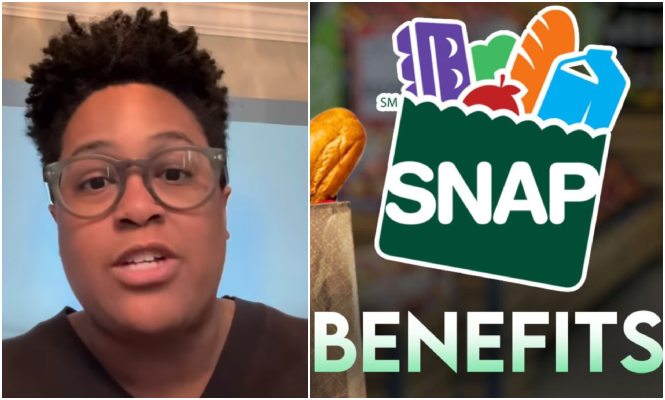
For food security advocate and content creator Danielle Perry, known online as DP, the budget approval represents more than a policy win; it is proof that grassroots organizing can drive meaningful change.
“We made history last night,” Perry said in a video celebrating the budget’s passage. “Illinois was the first, but I don’t want us to be the last. We don’t want to see anybody go hungry. This is a movement, and it’s just the beginning.”
The new program is backed by a $70 million state investment and is expected to assist approximately 120,000 Illinois residents who have already lost SNAP benefits, along with thousands more who could be affected in the coming year.
Perry credited the achievement to months of advocacy led by the Save Our SNAP coalition, a statewide network that grew from a single organization into a movement involving nearly 100 groups.
“We asked our state to be the first state in America to step up when the federal government steps back,” Perry said. “And Illinois did it.”
She also thanked residents who contacted lawmakers, attended rallies, traveled to Springfield, and amplified the campaign online.
“Together we made this happen,” she said. “Thank you to everybody who participated.”
The Greater Chicago Food Depository praised lawmakers for approving the funding, describing the FRESH program as a direct response to federal policy changes that have reduced food assistance for many households.
According to the organization, the emergency payments will help families purchase groceries while they work to meet new employment, volunteer, or educational requirements needed to maintain or regain SNAP eligibility.
Advocates say the program arrives at a critical time as many households continue to face rising food, housing, transportation, and healthcare costs.
The Chicago Food Depository also warned that larger challenges remain ahead. Beginning in 2027, states could face significant new financial burdens as federal policy shifts more SNAP-related costs to state governments.
While celebrating the budget victory, Perry urged advocates across the country to continue pushing for similar protections in their own states.
“New York, California—where you at?” she asked. “We don’t want to see anybody go hungry.”
The measure has drawn national attention because it marks one of the first major state-level responses to recent reductions in federal food assistance. Supporters hope Illinois’ action will serve as a model for other states seeking ways to cushion vulnerable residents from the effects of SNAP cuts.
For Perry and fellow advocates, however, the victory is only one step in a larger campaign to strengthen the nation’s food safety net.
“This win is because of you,” Perry wrote in her social media post. “We have a long way to go to reverse all the changes to our safety net, but this is a phenomenal start.”