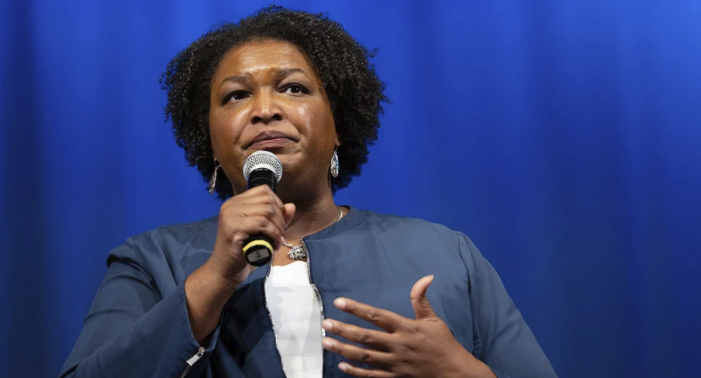
Stacey Abrams isn’t letting misinformation slide, especially when it targets Black men. During a recent episode of the Listen to Black Women podcast, Abrams directly confronted a radio host who claimed that Black men “were not going out to vote” for Kamala Harris.
The host said she was basing her belief on calls from listeners who insisted they would vote for “anyone but” Harris. Abrams, who has weathered years of political narratives about her own support among Black men, didn’t let it pass.
“Let’s look at the data,” she said calmly but firmly. “Black men support Black women. Black women support Black women the most. But the next highest support system? Black men.”
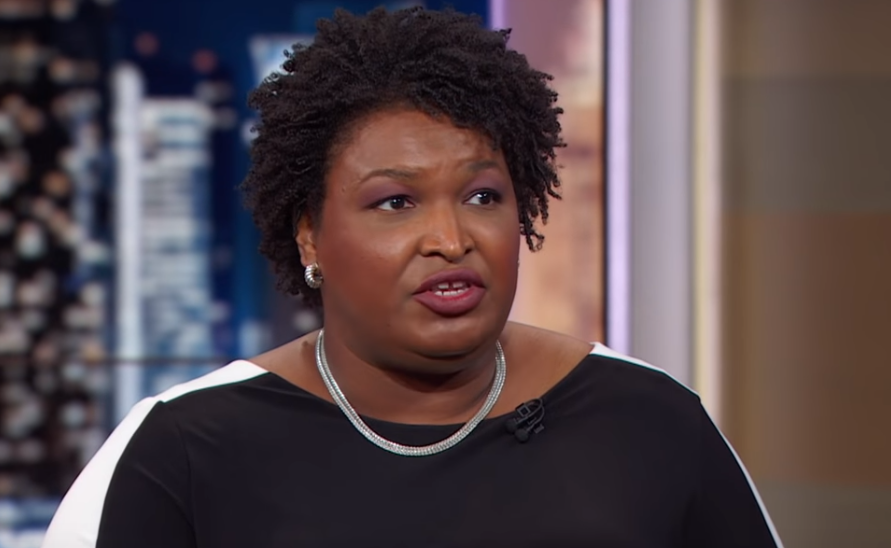
Her response was not only a correction but also a call to stop letting anecdotal noise overshadow measurable truth.
A lot of folks calling in weren’t planning to vote anyway
Abrams pointed out that the loudest voices in media aren’t always the most representative.
“People who call in to tell you what they’re going to do… weren’t planning to do anything anyway,” she said. “They didn’t vote at all.”
Her message: don’t mistake volume for data.
She cited her own 2018 gubernatorial race as an example. Despite media narratives claiming Black men “didn’t support her,” Abrams said they voted for her at the same rate they supported Sen. Raphael Warnock, a fact that rarely surfaced in mainstream political coverage.
A Misinformation Strategy Targeting Black Communities
Abrams went beyond correcting the record; she connected the dots.
“Disinformation often comes by planting people in our communities to fracture our belief systems,” she warned. “It is designed to fracture our communities.”
She explained that political misinformation campaigns often exploit existing mistrust in institutions, feeding voters misleading narratives about who is for them and who is not.
One of the most persistent misinformation tactics? Driving a wedge between Black men and Black women.
“My responsibility is to never let them tell me that my brothers don’t love me as much as my sisters,” Abrams said.
The Math Doesn’t Add Up — Literally
Abrams also took aim at the flawed data collection that fuels political myths.
Exit polls, she explained, regularly misrepresent Black voters.
“We are 13% of the population. How exactly are you finding a representative sample when you’re only talking to one or two people in every state?” she asked. “They extrapolate from that in ways that shape narratives but defy math.”
It’s a point voting rights advocates have made for years: small, skewed samples balloon into big national headlines, reinforcing stereotypes that hurt Black political power.
Why This Moment Matters
The exchange struck a nerve online. Many viewers praised Abrams for shutting down a narrative that resurfaces every election cycle: that Black men are disengaged, unsupportive — or worse, intentionally undermining Black women leaders.
Advocates say that narrative isn’t just unfair; it’s dangerous. It weakens coalition-building, depresses voter turnout, and reinforces harmful stereotypes.
The original post amplifying the clip put it plainly:
“Stop lying on Black men. Anecdotal evidence is not FACTS.”
A Call for Better Conversations — and Better Information
Abrams’ pushback underscored a broader point: data should drive discussions about Black political engagement, not speculation, frustration, or cherry-picked anecdotes.
“We can’t let them tell us who we are,” she said.
And as misinformation escalates ahead of every election, Abrams’ message is a reminder, the fight for democracy isn’t just at the ballot box. It’s in the narratives that shape who feels seen, supported, and empowered to show up.