
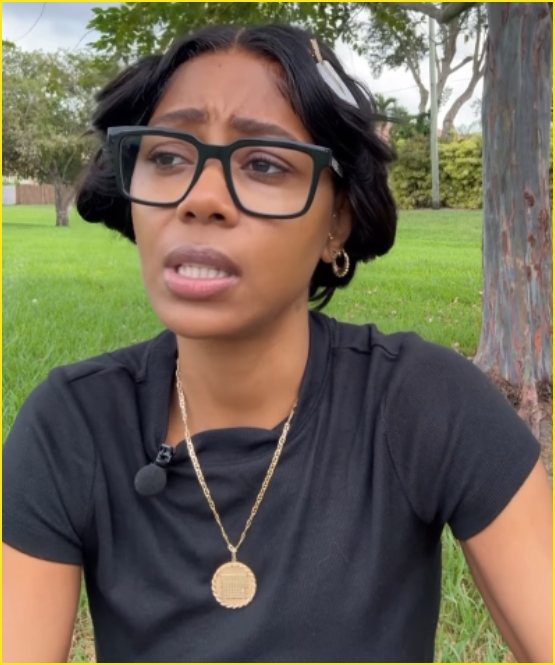
Social media influencer Summer Alise, known online as @summers_exotics, is urging followers to prepare for what she calls “the United States of Armageddon” — and to consider relocating to countries like Paraguay and Uruguay to preserve their financial and personal freedom.
In a recent Instagram post and accompanying video, Alise shared what she described as “just brushing the surface” of her strategy for life outside the U.S.
She told her audience that people who refuse to accept “the digital mark” — a phrase often associated with online conspiracy theories about future surveillance systems — should start planning now to live somewhere they can “grow [their] own food freely.”
A New Kind of “Digital Exodus”
While Alise’s tone was light-hearted at times, her message taps into a growing online movement — one in which influencers blend financial advice, prepper culture, and skepticism about government digital tracking into relocation guidance for disillusioned Americans.
“If you’re not taking the digital mark, then plan your options now to live somewhere you can grow your own food freely,” Alise wrote. “Paraguay and Uruguay do NOT enforce taxes on foreign income, no matter how much you earn.”
She went on to highlight that both nations allow foreigners to buy land freely without citizenship or permanent residency, and that their passports are ranked “in the top 25.”
In her video, Alise expanded on the appeal:
“Paraguay, you just need to prove that you have $5,000 of income from the U.S. and you can apply for temporary residency. Uruguay is $1,500. After three years, you can apply for citizenship — no marriage required.”
The Expat Dream — or Digital Disillusionment?
Alise’s advice lands in a cultural moment where remote work, political polarization, and anxiety about technology have made expat life a modern fantasy for many Americans.
Her followers, mostly digital entrepreneurs and wellness enthusiasts, appear intrigued by the mix of tax freedom, self-sufficiency, and personal sovereignty she promotes.
Some praised her for “thinking ahead,” while others questioned the practicality — and legality — of her approach to business trusts and offshore income.
Her claim that individuals should “turn their remote businesses over to a trust” and operate as both employee and trustee echoes tactics used by some offshore finance strategists to reduce tax exposure. However, such moves can trigger scrutiny from tax authorities if not structured lawfully.
Experts caution that “tax-free” promises abroad rarely tell the full story.
While Paraguay and Uruguay both offer favorable tax regimes, residency rules, and low thresholds for income proof, they still require compliance with U.S. tax laws for American citizens — who are taxed on global income regardless of residency.
Commentary: The Rise of the “Soft Escape Plan”
Summer Alise’s post reflects a larger social trend among younger, internet-savvy Americans: the idea of maintaining an “escape plan” — not through political rebellion or protest, but through financial migration.
This new wave of digital-age expats isn’t necessarily fleeing in panic. Many, like Alise, are seeking autonomy in an increasingly centralized and digitized world — one where privacy, taxes, and cost of living feel like battles of control.
Her content may sound extreme to some, but it resonates with a growing audience who see mobility as the ultimate safety net.
Whether motivated by distrust, practicality, or the pursuit of freedom, these voices are reframing global migration not as a last resort, but as a lifestyle hedge against uncertainty.