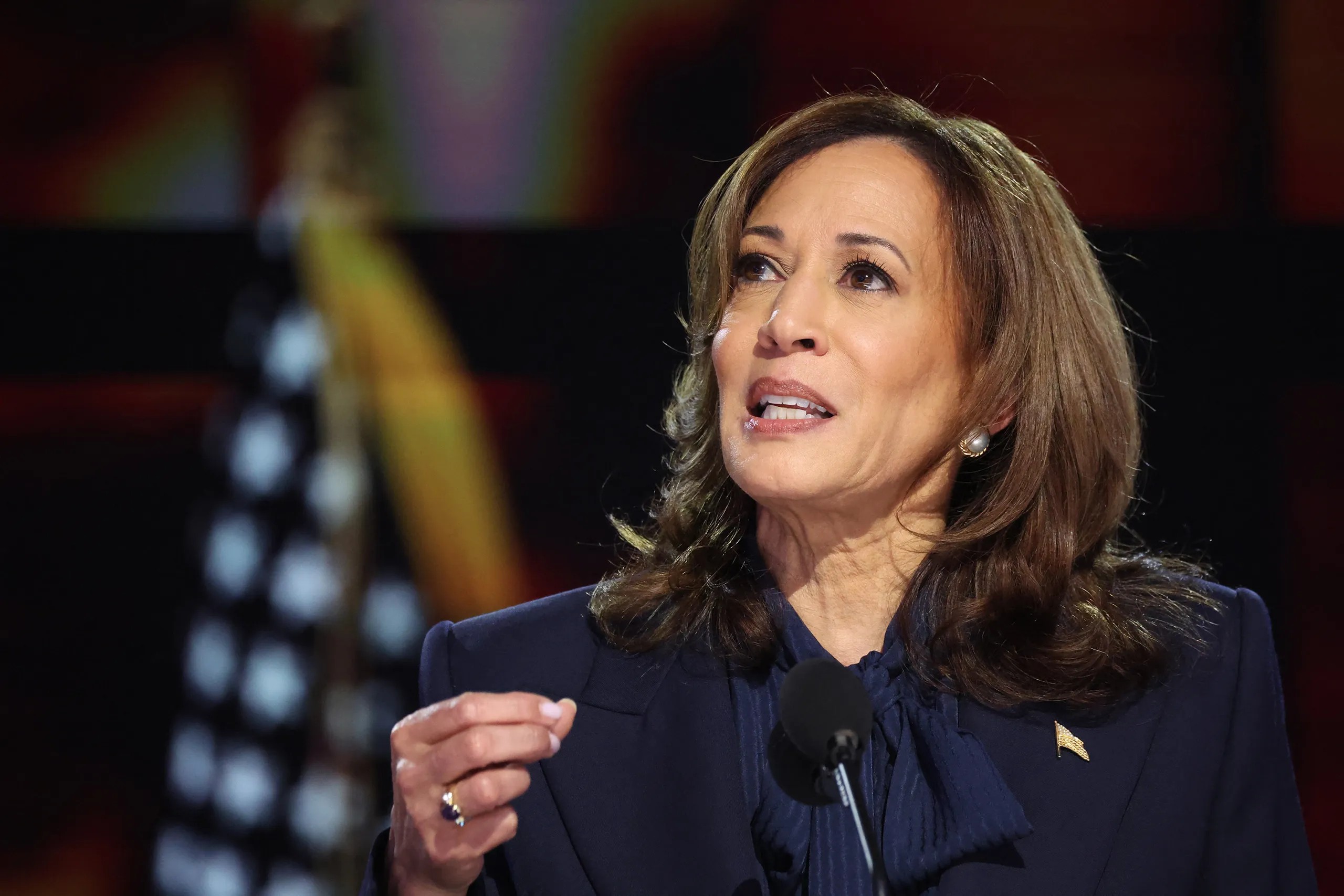
Former Vice President Kamala Harris sharply criticized the Supreme Court’s recent decision in Louisiana v. Callais, warning that the ruling could accelerate efforts by Republican-led states to dismantle Black-majority voting districts across the South.
Speaking after the decision, Harris argued the ruling effectively opens the door for states to weaken Black political representation while making legal challenges more difficult. The decision requires voters to prove “intentional discrimination” when alleging voting rights violations, a standard critics say is significantly harder to meet.
Harris accused Republicans of using redistricting to “cheat” electorally and described the ruling as enabling “back-door racism through politics.” She also renewed calls for major structural reforms, including expanding the Supreme Court, reconsidering the Electoral College, and discussing statehood for Puerto Rico and Washington, D.C., which she said could help “neutralise red-state cheating.”
The ruling has already triggered a wave of redistricting efforts in Republican-controlled states including Tennessee, Louisiana, Alabama, Georgia, and South Carolina. While much of the immediate focus has been on congressional maps ahead of the midterm elections, Black Democrats and voting-rights advocates warn the impact could spread far beyond Congress.
“As Republicans across the South race to redraw congressional lines ahead of the midterms, Black Democrats warn that another sweeping challenge to Black political power is on the horizon: the erosion of representation at the local level,” said Cliff Albright, co-founder of Black Voters Matter.
Albright said state legislatures, county commissions, and city councils could all become targets in a broader effort to dilute Black voting power. A report from Black Voters Matter and Fair Fight Action estimated that nearly half of the approximately 270 majority-Black legislative districts across 10 Southern states could eventually be eliminated.
North Carolina state Sen. Natalie Murdock called the situation “dire,” arguing that modern voting restrictions no longer require overt intimidation tactics to suppress representation.
Meanwhile, Mike Johnson condemned Harris’ remarks and accused Democrats advocating court expansion and related reforms of acting as “institutional arsonists.”