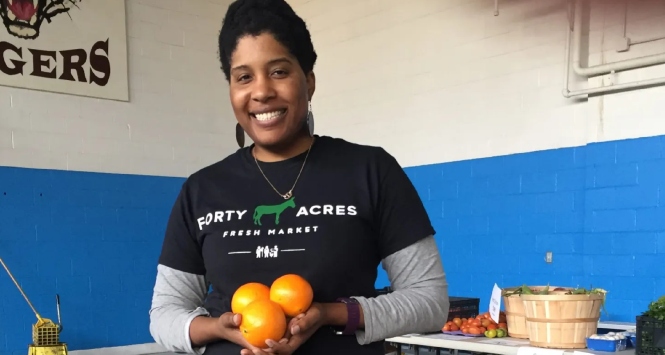
When Microsoft showed Liz Abunaw the door, she decided to open another one, this time, for an entire community.
Today, she’s the proud founder and owner of Forty Acres Fresh Market, Chicago’s only Black woman–owned grocery business. and a driving force in the city’s healthy food access movement.
Back in 2018, Abunaw launched her first pop-up market in Chicago’s Austin neighborhood, a predominantly Black community long deprived of affordable fresh food options.
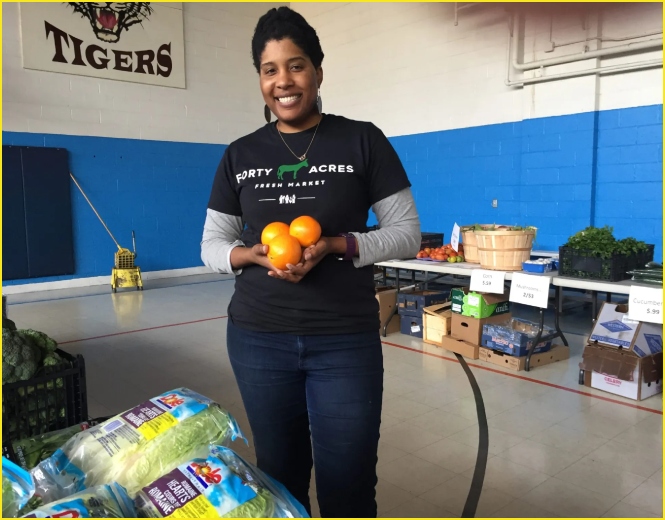
What started as a modest weekend produce stand has since evolved into a mobile grocery service, delivering fresh fruits and vegetables across the West Side and hosting seasonal markets that draw loyal customers citywide.
Her mission is as clear as it is personal: “Every hood should be healthy.”
For Abunaw, Forty Acres Fresh Market is more than a business — it’s a social movement rooted in equity and empowerment.
“Food is the foundation of good health,” she says. “Access to fresh, whole, nutrient-dense food should be easy for everyone.”
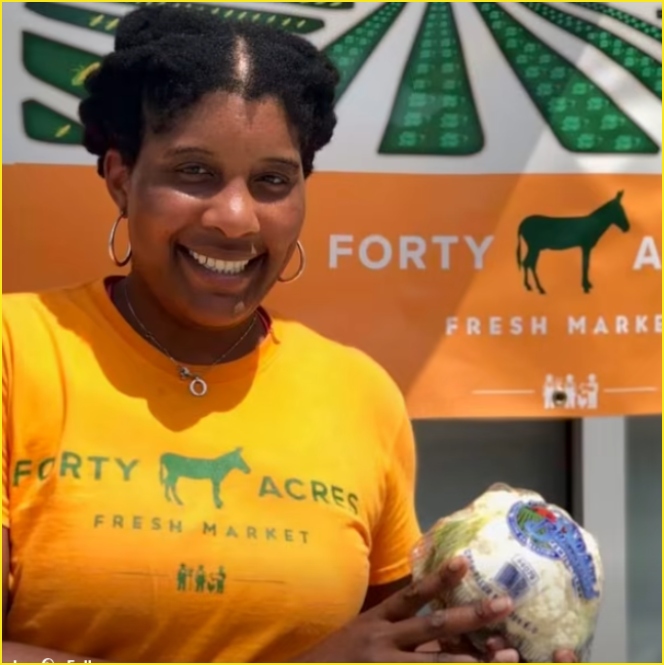
But in neighborhoods like Austin, Garfield Park, and North Lawndale, residents often live miles away from the nearest full-service grocery store. These “food deserts”, shaped by decades of disinvestment and redlining, have left entire communities relying on corner stores and fast-food chains for sustenance.
Abunaw saw this not as an inevitability, but as an opportunity to act.
Her company, named after the historic promise of “40 acres and a mule” made to freed Black families after the Civil War, embodies self-determination and collective progress.
By sourcing high-quality produce at low prices, Forty Acres Fresh Market aims to dismantle systemic barriers that keep healthy food out of reach.
Now, seven years after that first pop-up, Abunaw is preparing to open her first brick-and-mortar grocery store at 5713 W. Chicago Avenue, currently under construction and set to become a cornerstone of West Side revitalization.
“I want people to know this isn’t charity,” Abunaw told local supporters. “It’s community wealth-building. When you invest in food access, you invest in people’s futures.”
Her story resonates as a powerful reminder that innovation often grows from rejection.
Losing her corporate job at Microsoft might have closed one chapter, but it gave her the freedom to rewrite the narrative for her community, one fresh apple, one bunch of collard greens, one neighborhood at a time.