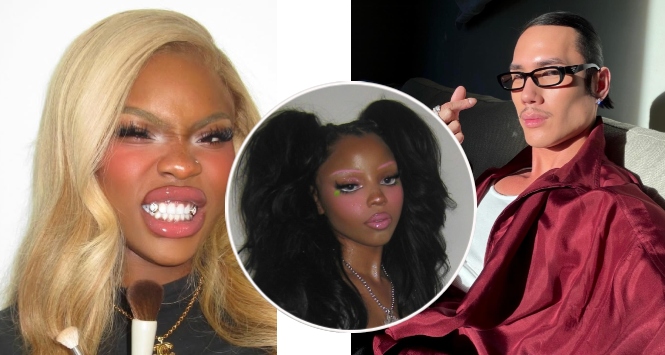
Fans are questioning whether Patrick Ta properly credited Ngozi Esther Edeme, better known online as Painted by Esther, for helping popularize the viral “transition blush” look.
The discussion exploded after Patrick Ta Beauty announced the upcoming launch of its Transition Blurring Blush Duo alongside a matching brush. Almost immediately, beauty fans on TikTok, Instagram, and Reddit began comparing the rollout to the signature blush style that Painted by Esther has become known for over the past few years.
Esther, whose real name is Ngozi Esther Edeme, built a strong following through her dramatic transitional blush technique, a layered makeup look that blends cream blush, concealer, pink powder, and color correction from the under-eye area down into the cheeks for a seamless gradient effect. The look became especially popular online after she worked with clients including Naomi Campbell, Tyla, Kelly Rowland, Olandria Carthen, and Doechii.
For many fans, the technique became closely associated with Esther’s work, particularly because of how striking the look appeared on darker skin tones and Black women. That connection fueled criticism once Patrick Ta’s product launch entered the conversation.
In a TikTok video that quickly spread online, Esther admitted she felt nervous speaking publicly about the situation. “I’m honestly very nervous to make this video,” she said before explaining that she did not want to be dismissed or stereotyped for raising concerns. “I don’t like being scared to say things because you know how easy it is for them to ‘angry Black women’ us.”
During the video, Esther described several experiences she said felt “weird” involving Patrick Ta and his brand. She specifically mentioned receiving a booking request while in Los Angeles from Patrick Ta Beauty co-founder Rima Minasyan.
Esther also pointed to similarities she noticed between her tutorials and Ta’s promotional content for the new blush products. She recalled previously sharing that a powder puff was the “holy grail” for achieving transition blush, only to later see Ta using a powder puff in his own tutorial. She also noted that she often says “back of your palm” instead of the more common phrase “back of your hand,” wording she claimed Ta later repeated in one of his videos.
As the conversation grew louder online, Patrick Ta responded publicly. He stated, “I do not own this look,” while also tagging Esther and acknowledging her role in helping popularize the style, particularly through her work on Olandria.
At the same time, many beauty fans argued that while Esther may not have invented transitional blush, she undeniably helped push it into mainstream beauty conversations over the last few years. Social media users flooded Patrick Ta Beauty’s comment sections, with some accusing the brand of profiting from a trend closely tied to Esther’s artistry without initially giving enough visible credit.
Others questioned the need for new blush products entirely, arguing that most makeup lovers could already recreate the look using products they already own. One commenter wrote, “The overconsumption of products is insane. Give @paintedbyesther her credit. You don’t need another blush palette to achieve this.”
Still, another side of the conversation focused on the broader history of the technique itself. Fans and makeup professionals pointed out that transitional blush has existed for decades under different names, including gradient blush, ombré blush, and blush draping. The style has roots in Korean and Japanese beauty trends and was also famously embraced in the United States by legendary makeup artists, including Way Bandy and Kevyn Aucoin.
Even Esther herself has never claimed ownership of the technique. Throughout her content, she has openly referenced artists such as Danessa Myricks, Pat McGrath, and Kevyn Aucoin as inspirations behind her work.