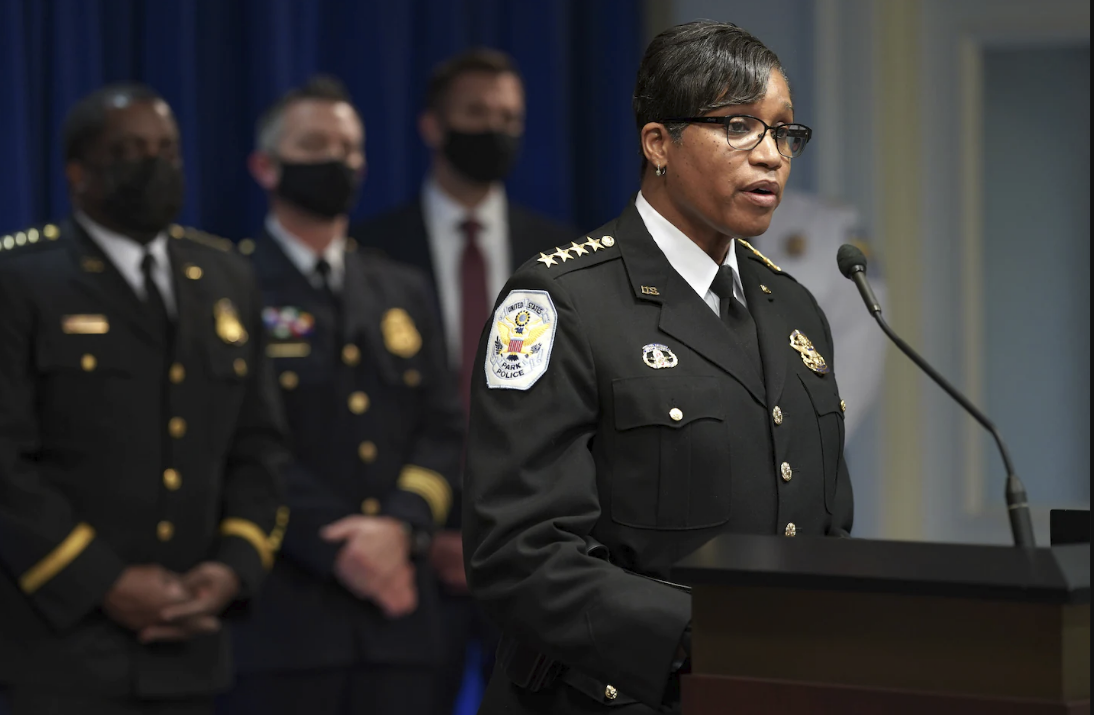
D.C. Police Chief Pamela Smith, the first Black woman to lead the Metropolitan Police Department, is stepping down after two years in the job.
Mayor Muriel Bowser announced Monday, Dec. 8, 2025, that Smith’s final day will be Dec. 31. Smith later issued a statement confirming, but neither she nor Bowser gave a reason for her departure or named a potential successor.
Smith, appointed in 2023 during one of the city’s most difficult periods on public safety, said in a statement she was “deeply humbled” by the opportunity to lead the department.
“Serving as Chief of Police has been the greatest honor of my career,” she said, thanking Bowser, the D.C. Council and residents for what she called “trust and partnership” during a time of shifting political winds and community unease.
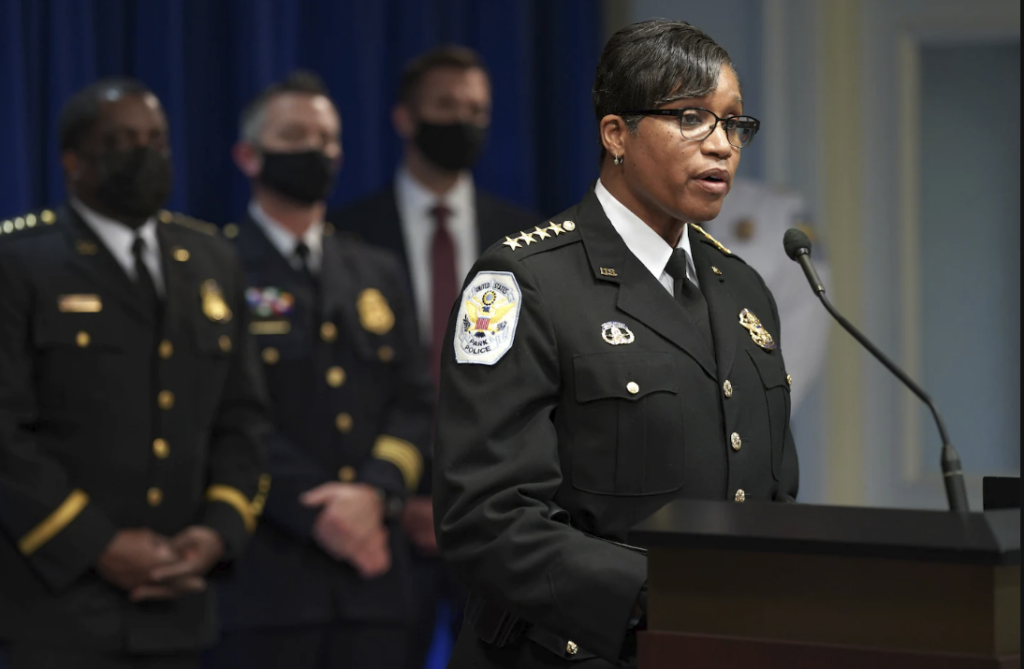
A Tenure Defined by Crime Surges, Political Tension and Federal Involvement
Smith’s exit comes months after an extraordinary move by President Donald Trump, who deployed hundreds of National Guard troops to the capital to address what he said was a spike in violent crime. Last month, two Guard members were shot during the deployment—one fatally—a tragedy that renewed debate over federal intervention in the city’s policing.
The announcement also lands as Bowser, who appointed Smith, has decided not to seek reelection, deepening uncertainty around the city’s leadership and long-running clashes over D.C.’s autonomy.
Bowser praised Smith for leading during a “challenging time” and making “tremendous progress.” She pointed to Smith’s role in opening the Real-Time Crime Center—now a central hub for data-driven policing—and steering the city through what she described as “unprecedented challenges and attacks on our city’s autonomy.”
“Chief Smith dramatically drove down violent crime, drove down the homicide rate to its lowest levels in eight years, and helped restore a sense of safety in our neighborhoods,” Bowser said.
A Career Spanning Local and Federal Law Enforcement
Smith brought 25 years of experience to the role, including leading the U.S. Park Police and serving as MPD’s first chief equity officer. She later oversaw the department’s Homeland Security Bureau before rising to the top job.
Her appointment came as D.C. faced its most violent year in nearly two decades. After homicides and carjackings surged in 2023, prompting congressional hearings and emergency legislation, Smith pushed a more aggressive, targeted public-safety strategy.
That included designating drug-free zones in high-crime areas, and later, issuing youth curfew orders in Navy Yard and the U Street corridor after a chaotic summer night of teen gatherings. The D.C. Council voted in November to extend her authority to impose juvenile curfew zones for three more months.
The city’s early 2024 numbers showed progress: overall crime dropped 17% in the first two and a half months of the year, an improvement Smith attributed to both the new crime bill and an increased police presence in trouble spots.
A Legacy Still Taking Shape
Smith’s departure leaves open questions about the future of D.C.’s crime strategy, especially as the city enters an election year without an incumbent mayor and remains under pressure from Congress and the White House.
Still, Smith said the city is “in a strong position” and on a “positive trajectory.”
“I remain inspired by the resilience and spirit of this community,” she said.
As the search for a new chief begins, Washington finds itself at another inflection point, balancing political shifts, federal pressure, and the ongoing challenge of rebuilding public trust in a city where public safety remains a defining issue.