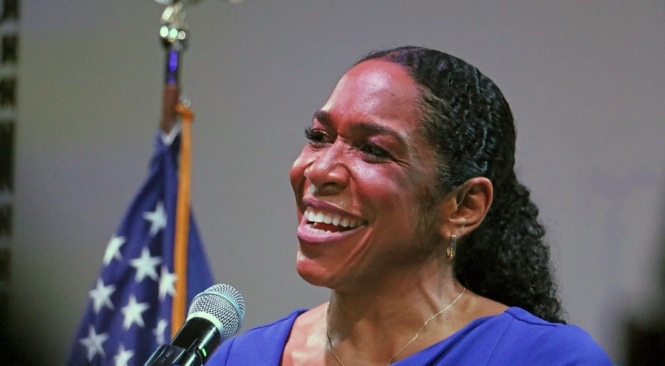
Juliana Stratton has secured the Democratic nomination for the U.S. Senate in Illinois, putting her on track to potentially become one of the few Black women ever elected to the upper chamber.
Stratton, the current lieutenant governor of Illinois, won Tuesday, March 17, 2026’s closely watched and expensive primary, emerging as the Democratic Party’s candidate in a race that could carry historic significance.
If elected in November, she would become just the sixth Black woman to serve in the United States Senate and the second Black woman ever nominated for the Senate from Illinois.
General Election Ahead
Stratton is set to face Republican candidate Don Tracy, a former chair of the Illinois Republican Party, in the general election.
Her primary victory was driven by strong support across key voting blocs in Chicago, Illinois and statewide, signaling a shift in Illinois Democratic politics.
We Showed What’s Possible
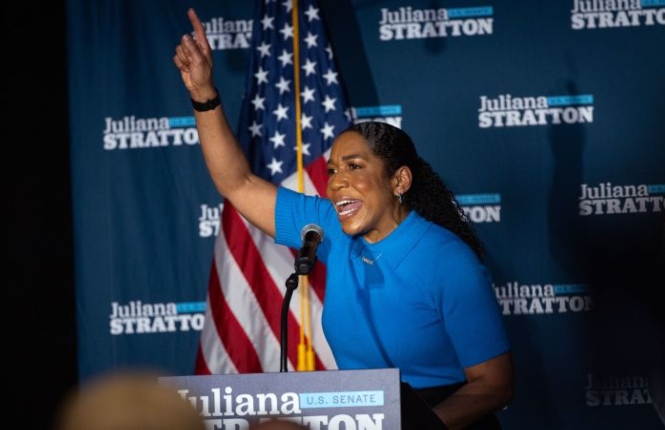
In her victory speech, Stratton stressed grassroots engagement and staying true to core values.
“We did it. Tonight we showed what’s possible when you listen to the people and give the people what they want,” she said. “We have demonstrated what’s possible when you stay true to your values, fight for what you believe in, and never take anything for granted.”
Bold Policy Positions
During the campaign, Stratton drew attention for taking firm stances on several national issues.
She voiced support for abolishing U.S. Immigration and Customs Enforcement (ICE), arguing that the agency cannot be reformed and has caused harm in communities.
Stratton also signaled a willingness to challenge Democratic leadership in Washington, stating she would not support Chuck Schumer as Senate Democratic leader if elected.
In addition, she pledged to oppose confirming nominees from former President Donald Trump, citing concerns about governance and the balance of power.
Broader Debate on Judiciary and Power
Stratton also weighed in on the future of the U.S. Supreme Court, suggesting that reforms such as term limits or expansion should be considered to maintain checks and balances.
Her comments reflect a broader debate within the Democratic Party about institutional reform and the direction of national leadership.
Historic Stakes
Stratton’s candidacy adds to the growing presence of Black women in national politics, a group that has historically been underrepresented in the Senate.
With the general election approaching, her race against Tracy is expected to draw national attention, both for its political implications and its potential to further diversify one of the most powerful legislative bodies in the United States.