
When Kamille Carter’s phone began buzzing in the early hours of the morning, she had no idea her life was about to change.
By 3 a.m., the Gwinnett County mother of eight and former flight attendant for Spirit Airlines learned she was out of a job—instantly.
“It wasn’t like, ‘you have a week’ or ‘you have a day.’ No, it was immediate,” Carter told Atlanta News First, describing the moment she opened an email from the airline’s CEO announcing the company was winding down operations and eliminating most positions.
Sudden Layoffs Spark Outrage
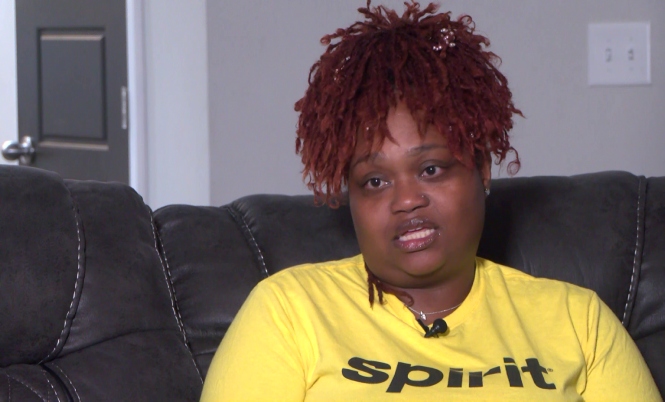
Carter, who had worked for the airline for nearly five years, said what hurt most wasn’t just the job loss—it was how it happened.
“Let’s go out with dignity. Let’s go out with integrity. I don’t feel like that happened here,” she said, calling the overnight closure “selfish.”
According to Carter, the email not only confirmed the layoffs but also stated that employee benefits would end immediately, leaving workers scrambling.
“How are we supposed to go to the doctor if you tell me it’s canceled immediately?” she asked. “If there’s an emergency, what am I supposed to be doing?”
Families Left in Uncertainty
For Carter, the impact is deeply personal. As a mother of eight, her immediate concern wasn’t just employment, it was survival.
“The first thing I thought about were my children,” she said. “They expect the lights, the gas, the water.”
She described the emotional toll of the sudden loss, especially after feeling that her life had finally reached a stable point.
“You feel like things are leveling off… and then it’s like, here’s something else,” she said. “That’s the hard part.”
Across the country, thousands of airline employees are believed to be facing similar uncertainty following the abrupt shutdown.
Broader Questions About Corporate Accountability
The situation has sparked renewed debate about how companies handle closures and layoffs, particularly regarding notice periods, employee protections, and access to healthcare benefits.
Labor advocates argue that abrupt terminations, especially those executed overnight, can leave workers financially and medically vulnerable, raising ethical concerns even when legally permissible.
Carter’s experience highlights a growing tension between corporate decision-making and worker security in volatile industries like aviation.
Turning Setback Into Opportunity
Despite the uncertainty, Carter says she is choosing to move forward. She plans to rely on her decade-long catering business as she rebuilds.
She also offered words of encouragement to her former colleagues navigating the same upheaval.
“Follow your heart. Follow your dreams,” she said. “Sometimes we have to be made uncomfortable to get pushed into our destiny.”

