A social media creator is arguing that slavery in America never truly ended but instead evolved into new systems of economic and institutional control.
Tiffany Lauren Jones, who focuses on self-discovery and identity work, shared a provocative Instagram post examining the historical links between slavery, incarceration, economic inequality, and access to opportunity in modern America.
“Slavery never ended. It just changed forms,” Jones wrote in the post shared on her Instagram page, @tiffanylaurenjones.
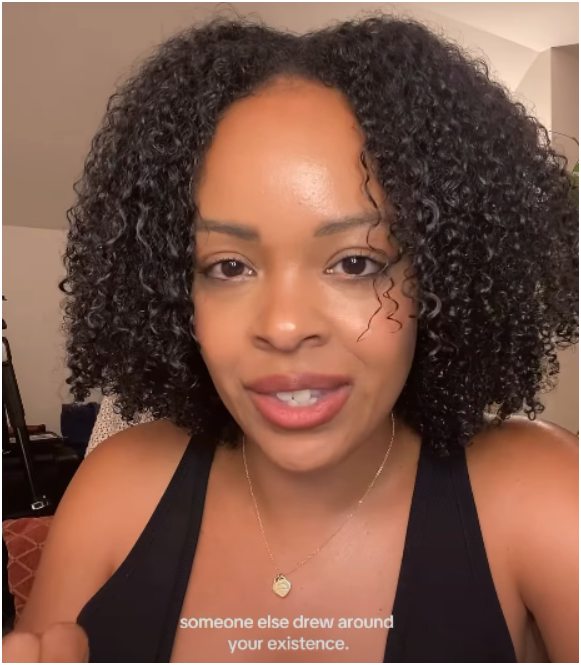
Her comments drew widespread engagement online as conversations continue nationally around prison labor, racial wealth disparities, systemic inequality, and the lasting legacy of slavery in the United States.
In her post, Jones referenced abolitionist Frederick Douglass and recounted a well-known quote attributed to Hugh Auld, the enslaver who objected to Douglass being taught to read.
“Learning would spoil the best slave in the world,” the quote states in part. “If you teach that slave to read, there would be no keeping him.”
Jones argued that the fear of an “awakened mind” remains central to systems of power today.
“The awakened mind was always the threat,” she wrote. “That threat has never gone away.”
Her commentary also pointed to the exception clause in the 13th Amendment, which abolished slavery “except as a punishment for crime,” a provision that has long been scrutinized by historians, prison reform advocates, and civil rights organizations.
Jones cited the use of compulsory prison labor across the United States, noting that many incarcerated individuals work for little or no pay depending on the state.
Outside prison systems, she argued that economic dependence and social conformity have replaced older forms of overt control.
“Economic compliance replaced the whip,” she wrote, arguing that many people today survive by “performing the right identity, speaking the right way, and staying within limits others set.”
Her comments arrive amid ongoing national debates surrounding wealth inequality, labor exploitation, mass incarceration, and racial disparities in economic mobility.
According to recent federal economic data, the racial wealth gap between Black and white households remains substantial, with researchers and economists continuing to examine how historical discrimination, housing segregation, educational disparities, and labor inequities contribute to generational wealth differences.
Jones also emphasized intellectual ownership, creativity, and self-determination as pathways toward empowerment.
“Your gifts, your story, your intellectual property, these are the bypass,” she wrote. “The path to freedom has always run through what they could never take from you.”
The post has sparked both support and criticism online, with supporters praising the historical analysis and critics disputing comparisons between slavery and modern economic systems.
“The mental and physical warfare against our people is very ancient, Prophetic and scientific indeed. You don’t create this many negative constructs and systems if there isn’t some type of greatness or threat,” one supporter commented.
Still, the message has resonated widely among users discussing systemic inequality, educational access, financial independence, and the continuing impact of America’s racial history on present-day institutions.