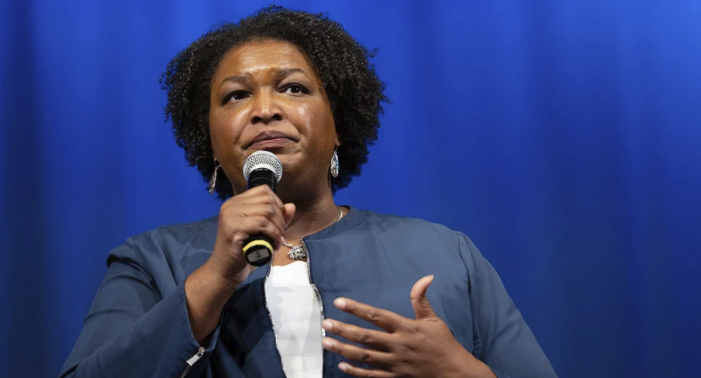
Stacey Abrams, voting-rights advocate and former Georgia House minority leader, is sounding the alarm about what she calls a steady, calculated erosion of American democracy.
She cautions that talk of outright cancellation of the 2026 midterm elections misses the point.
In a segment shared by MSNBC, Abrams said the danger is not a single, cinematic move to cancel elections, but a series of administrative and legal maneuvers that leave ballots intact in form while hollowing them out in practice.
“Canceling future elections is an illusion because you’ll still have the elections,” Abrams said on the network’s Instagram clip. “Putin has elections in Russia. What happens is that the elections have no meaning because the outcome is preordained.”
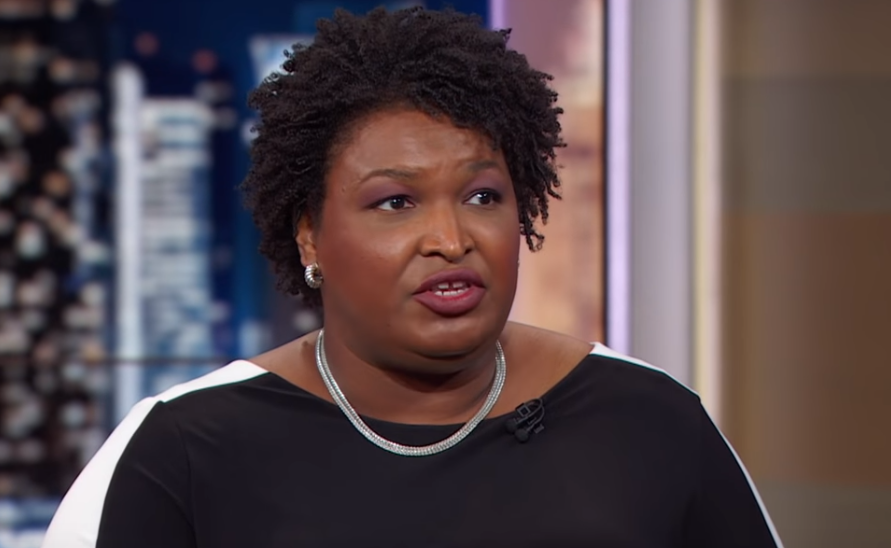
Abrams argued the current strategy is piecemeal and bureaucratic: mid-decade redistricting in states like Texas and Missouri, legislative measures such as the proposed SAVE Act that she says would make it harder for many women to get IDs required to vote, and large-scale voter removals such as the purging of more than 400,000 names in Georgia this year.
Those, she said, amount to “incremental” steps that, taken together, match what she called the ten stages in an “authoritarian playbook.”
Abrams framed her remarks as a call to attention rather than a prediction of a single headline-making event. She pointed to reporting and analysis she discussed on her podcast, Assembly Required, notably a conversation with journalist Ari Berman, who has documented how legal tactics, election administration changes, and targeted rules can shift political power without ever formally cancelling an election.
“We have to shift our focus from the grand cinematic moments that we’re used to and recognize that this is done in piecemeal, but very much in a pattern,” Abrams said.
Legal scholars and voting-rights groups have long argued that changes to election law and administration — from strict voter-ID rules to altered district maps and purges of voter rolls — can disproportionately affect marginalized voters and change outcomes.
Abrams’ comments highlight how advocates view the present moment: not as a crisis that will necessarily culminate in a single illegal shutdown of voting, but as a series of lawful-seeming actions that together can undermine representative government.
Abrams’ warning has both political and legal implications. If redistricting occurs mid-decade or if administrative barriers systematically reduce turnout among particular groups, affected voters and civil-rights organizations could turn to the courts to challenge those measures — a path Abrams herself has taken repeatedly in Georgia. Her framing also ramps up pressure on policymakers and the public to scrutinize not only whether elections are held, but how rules, lists, and maps are being changed in the run-up to 2026.
Whether voters, legislators or judges will counteract the changes Abrams describes remains a central question for the 2026 midterms.
For now, her message to the public is clear: focus less on whether elections will be canceled outright and more on the accumulation of rules and administrative moves that can make elections effectively meaningless if left unchecked.