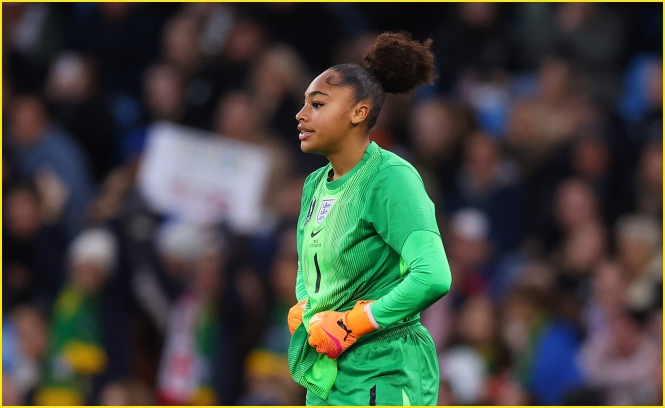
In front of nearly 40,000 roaring fans at Manchester’s Etihad Stadium, 21-year-old Khiara Keating did more than just make her debut for England, she made history.
The young goalkeeper became the first Black woman ever to play between the posts for England’s senior national team, marking a groundbreaking moment that arrived fittingly during Black History Month.
For Keating, a Manchester native who has long dreamed of wearing the Lionesses jersey, the night was emotional and unforgettable.
“I was a bit nervous with it being a big, big game,” she admitted after the match. “But with it being at home and at my home club, it calmed me down a bit.”
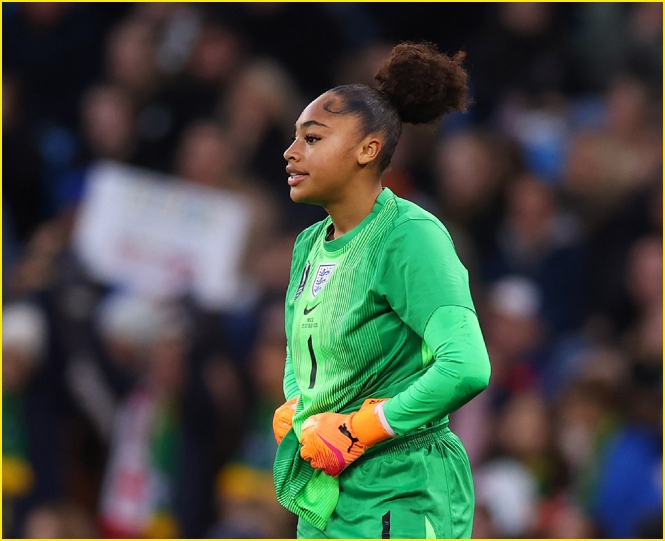
Although England fell 2-1 to Brazil, Keating’s debut transcended the scoreboard. The sight of a young Black woman standing tall in goal for the national team represented something deeper, a quiet revolution in representation, decades in the making.
A Moment Beyond Football
Keating’s first cap makes her the 236th player to represent the Lionesses, but it’s the first time the position of goalkeeper has been occupied by a Black woman, a milestone that many say was long overdue.
“It was quite special knowing that I was going to make history,” Keating reflected. “But I just hope the next gap is not that big and we can change that.”
Her words struck a chord. For generations, Black women have been underrepresented in certain positions within English football, particularly in goal — a space historically dominated by white players. Keating’s debut, therefore, isn’t just a sporting achievement; it’s a cultural moment that challenges perceptions of who belongs where.
Support, Pride, and Perspective
In a sport that thrives on teamwork and mentorship, Keating found comfort in the encouragement of her fellow Lionesses. Goalkeeper Hannah Hampton gave her a piece of advice before the game that stuck: “Just go and enjoy it. You only get one debut.”
And she did — with grace, focus, and poise under pressure. After the match, Keating was presented with her legacy cap, an official recognition of her role in England’s football history. Her family, including her mother and loved ones, were in the stands watching the dream unfold.
“It was so nice to see everybody — my mum, my family, and everyone that came down,” she said, smiling. “The players were so supportive.”
Representation Matters
Keating’s story reaches far beyond Manchester. It’s evidence of why visibility in sport matters, especially in positions where diversity has been slow to take root. Her success sends a powerful message to young Black girls watching from the sidelines: there is space for you everywhere on the pitch.
Her debut also comes at a symbolic moment, during Black History Month — a time when the UK celebrates the contributions of Black Britons to the nation’s history and culture. Keating’s performance felt like a living extension of that celebration, not just breaking a barrier but widening the path for those who will follow.
Looking Ahead
The Lionesses return to action on Tuesday against Australia at Derby County’s Pride Park, but for Khiara Keating, the story has already begun. Whether England wins or loses in the next match, one thing is certain, the team has gained more than a promising goalkeeper; it’s gained a new symbol of progress.
Keating’s rise is a lesson in patience, perseverance, and pride. Her presence on that pitch may have been one night in Manchester, but its echo will carry far beyond the stadium.