
For Black History Month, the story of Jessie Maple stands as a worthy and appropriate reminder of what it means to fight exclusion and reshape an entire industry.
In the mid-1970s, when the American film and television industry functioned largely as a closed “boys’ club,” Maple refused to accept the limits imposed on Black women. Instead, she took an extraordinary step: she filed a lawsuit against the three major U.S. broadcast networks — ABC, CBS, and NBC — challenging discriminatory barriers that kept her out of professional camera work.
Her victory would make history.
From Science to Cinema
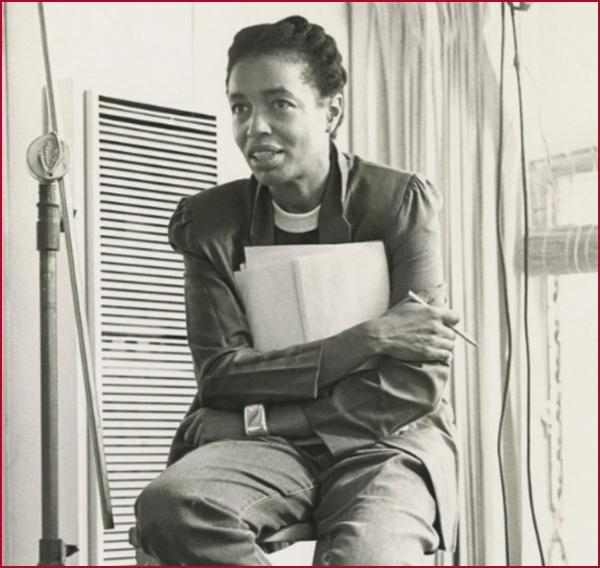
Born in 1937 in New York City, Maple did not begin her career in entertainment. She initially trained and worked as a bacteriologist — a path that reflected both academic discipline and limited career options available to Black women at the time.
But Maple had creative ambitions. She left science to pursue filmmaking and camera operation — fields overwhelmingly dominated by white men.
At the time, entry into professional film work depended heavily on union membership. Maple confronted a major obstacle: the New York Camera Operators Union had never admitted a Black woman.
Determined, she took legal action — and won.
Her court victory in 1975 secured her admission, making her the first African American woman ever accepted into the union, a milestone that opened doors for future generations of women and filmmakers of color.
Facing Blacklisting — and Fighting Back
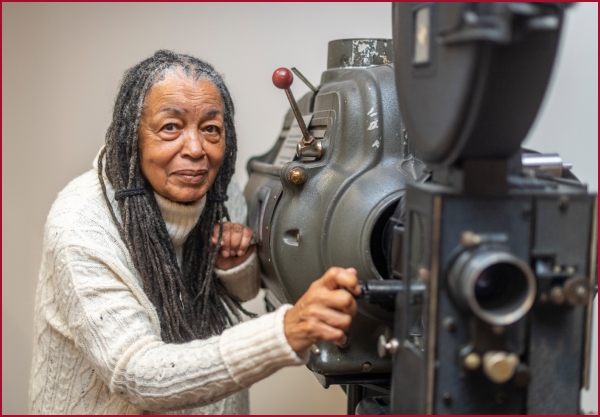
Winning entry into the union did not guarantee opportunity.
According to historical accounts, Maple soon faced industry resistance and informal blacklisting. Work offers were scarce despite her qualifications.
Rather than waiting for acceptance, she created her own platform.
In 1981, she directed “Will,” widely regarded as one of the first independent feature films directed by a Black woman in the United States. The film explored themes of addiction, recovery, and community, reflecting social realities rarely portrayed in mainstream cinema at the time.
When traditional theaters refused to screen the film, Maple and her husband took another bold step: they transformed their Harlem brownstone into a cinema space known as the 20 West Theater.
The venue became a vital cultural hub, providing a space for Black independent filmmakers whose work was often excluded from mainstream distribution.
A Pioneer of Independent Black Cinema
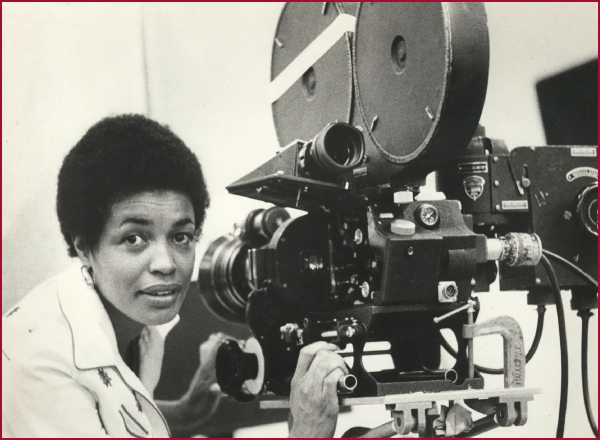
Film historians credit Maple with helping to shape the landscape of independent Black filmmaking during a period when institutional barriers were particularly entrenched.
Her career reflected a broader shift taking place in the 1970s and 1980s — one in which marginalized creators increasingly built alternative distribution channels to bypass exclusion in traditional Hollywood systems.
Beyond filmmaking, Maple was also a mentor and advocate who encouraged young artists to pursue careers behind the camera, expanding representation within the industry.
Legacy and Recognition
Jessie Maple died in 2023 at the age of 76, but her influence continues to resonate.
Today, scholars and filmmakers recognize her as:
- A legal trailblazer who challenged systemic discrimination
- A pioneer of Black independent cinema
- A champion of creative self-determination
Her story illustrates a defining lesson: when institutions exclude, innovation and resilience can create new pathways.
As Black History Month highlights figures who reshaped society, Maple’s legacy endures as proof that representation behind the camera can change who gets to tell the world’s stories.

