
Attorney Danielle Bess is drawing attention to a major voting rights decision after a federal three-judge panel struck down Alabama’s congressional map, ruling that it was intentionally discriminatory toward Black voters.
The decision comes amid ongoing national debate over the future of the Voting Rights Act of 1965 and how courts will interpret redistricting cases following the Supreme Court’s recent ruling in Louisiana v. Callais.
In an Instagram video breaking down the legal significance of the ruling, Bess explained that the case could become a defining test of how aggressively courts are willing to protect minority voting power moving forward.
“This is an important case because it’s going to tell us how the United States Supreme Court is going to handle Voting Rights Act cases going forward,” Bess said.
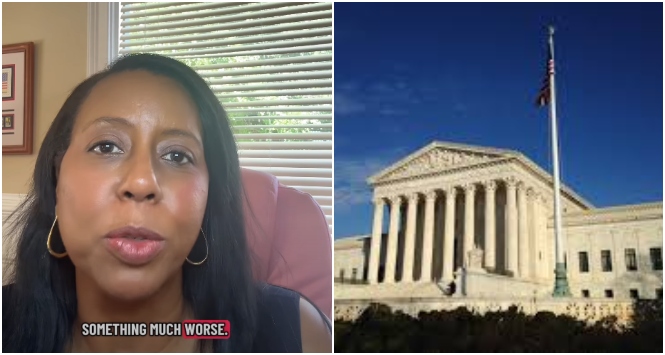
According to Bess, Alabama lawmakers enacted the challenged congressional map shortly after the Callais decision. The map allegedly would have reduced the state to only one majority-Black congressional district despite ongoing litigation over minority representation.
A federal three-judge panel has now ruled that the map amounted to intentional racial discrimination.
“The judges wrote these events, along with legislature’s contemporaneous statements about race, support only one inference,” Bess explained while quoting from the ruling. “The purpose of the 2023 plan was to distribute Black voters across districts to dilute their votes, at least in part because they are Black.”
Bess noted that the panel included judges appointed by both Democratic and Republican presidents, including two appointed by Donald Trump and one appointed by Bill Clinton.
She argued that the bipartisan makeup of the court underscored the seriousness of the findings.
The attorney also explained the broader legal stakes behind the ruling, particularly after the Supreme Court’s evolving standards in voting rights cases.
“We are about to learn if the Supreme Court’s new formula in the Callais decision, which requires a finding of intentional discrimination in order for a map to be struck down, is what they really intended,” Bess said, “or if they really just wanted to strike down the Voting Rights Act completely.”
The ruling could preserve two majority-Black congressional districts in Alabama, including the district currently represented by Shomari Figures.
Legal observers widely expect the case to return to the U.S. Supreme Court, where the justices’ eventual decision may shape the future of racial gerrymandering challenges and federal voting protections nationwide.

