A social media post criticizing a Black woman relaxing poolside at a luxury hotel backfired, prompting the woman who made the critical post to quickly and quietly delete it.
The controversy began when Sharon O’Dea posted a series of comments on Threads describing her reaction to a fellow hotel guest in Panama City.
In the now-deleted posts, O’Dea fixated on a Black woman who was quietly sitting by a rooftop infinity pool, taking photos and enjoying the view. Without interacting with her, O’Dea constructed a narrative suggesting the woman was “furious” and resentful.
“She is furious. I am delighted,” O’Dea wrote, despite no indication of any interaction between the two.
The posts went further, criticizing the woman’s behavior as performative and shallow—comments many online users later described as invasive, condescending, and unfounded.
Backlash and Accusations of Bias

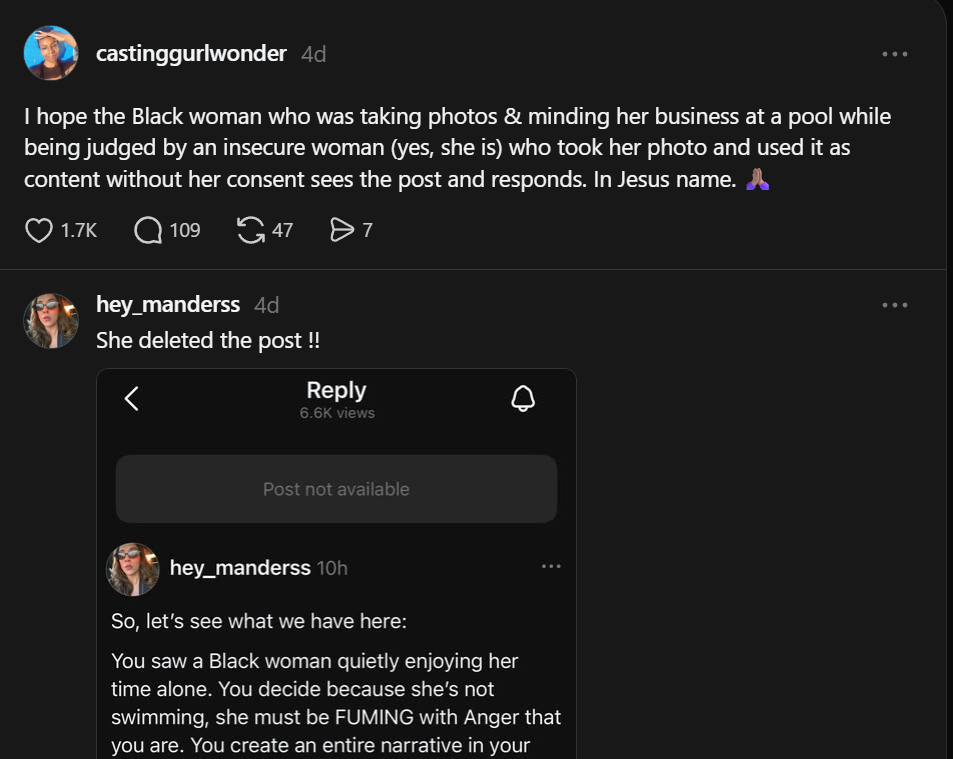
The reaction was swift. Social media users across platforms condemned the posts, with many pointing out how the woman had been minding her own business before being photographed and publicly scrutinized.
Critics also raised concerns about racial bias, noting a pattern where Black women are often mischaracterized as angry or hostile without cause.
One commenter described the situation as “borderline stalkerish,” while others questioned the ethics of photographing and posting about a stranger without consent.
Privacy in the Age of Social Media
The incident highlights growing concerns about digital privacy and the normalization of turning strangers into online content.
Experts say the rise of platforms like Threads has blurred the line between public observation and personal intrusion, especially when individuals are filmed or photographed without their knowledge.
In this case, critics argue the situation was exacerbated by the creation of a false narrative that painted the subject in a negative light.
Post Deleted, Debate Continues
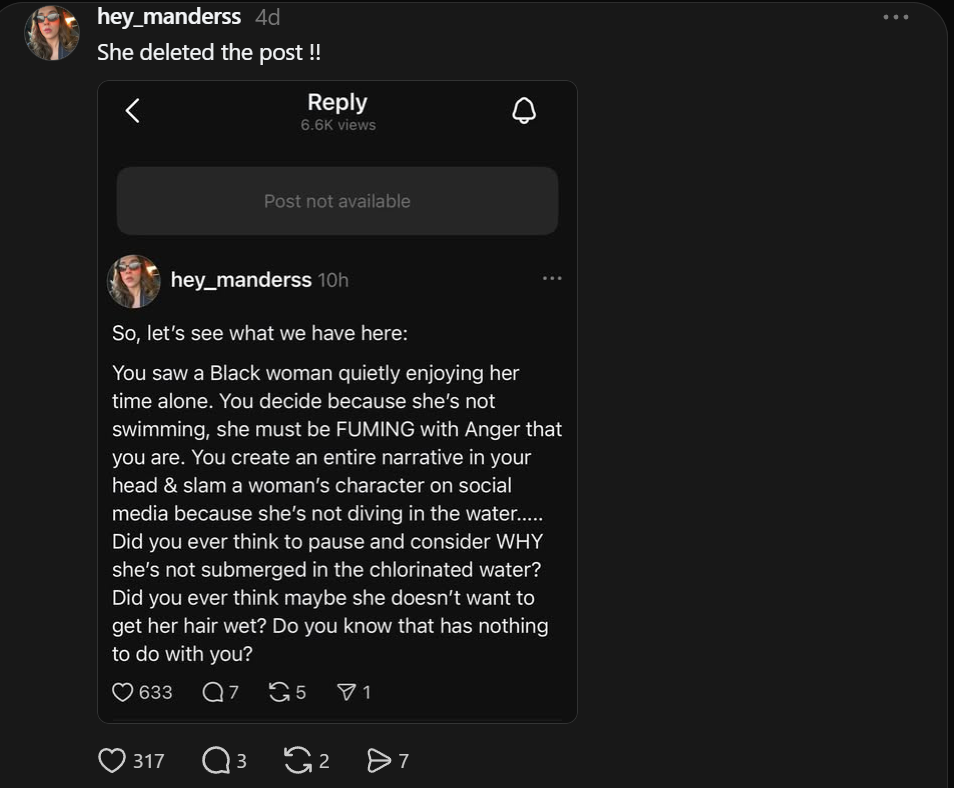
Following the backlash, O’Dea reportedly deleted the posts. However, screenshots continue to circulate, keeping the controversy alive and fueling ongoing debate.
For many, the episode underscores deeper issues about how people—particularly women of color—are perceived and portrayed online, as well as the responsibility that comes with public posting.
A Larger Cultural Conversation
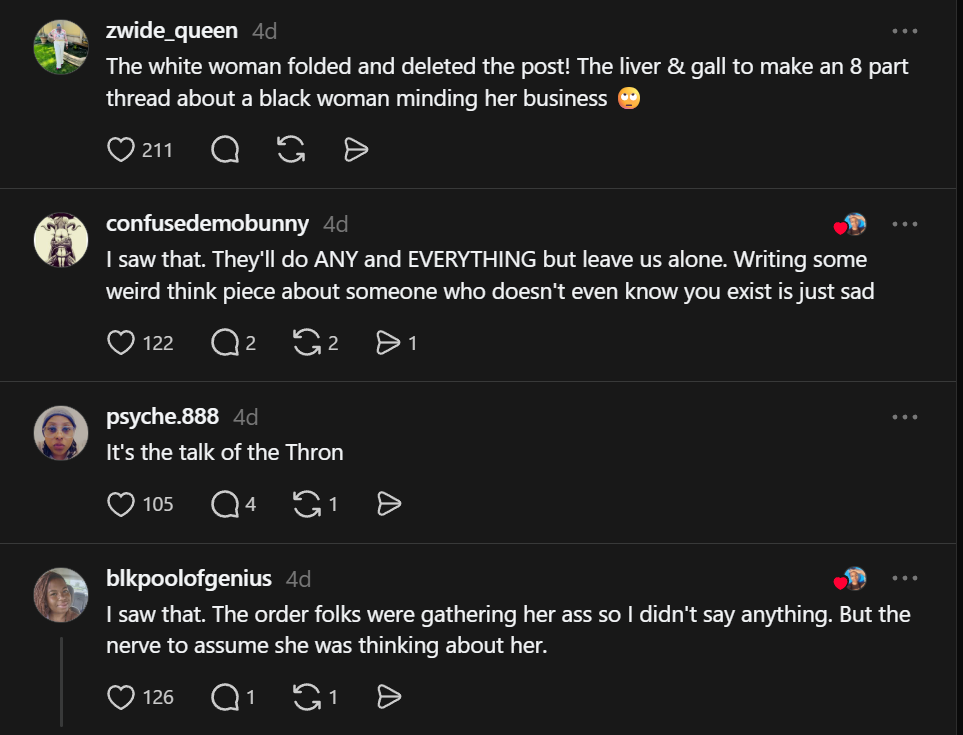
The incident has become more than a fleeting viral moment. It has sparked broader discussions about respect, consent, and the ways in which social media can amplify bias and misinterpretation.
At its core, the backlash reflects a growing demand for accountability in how individuals use digital platforms—and a reminder that even seemingly small actions online can have wide-reaching consequences.