Formula 1’s rise in the United States reached a striking cultural milestone when it unexpectedly became fodder for the 2024 presidential conversation. For a sport that once struggled to compete against the deeply entrenched fanbases of NASCAR and IndyCar, hearing F1 invoked on the national political stage underscored just how dramatically the landscape has shifted.
Not long ago, Formula 1’s presence in the U.S. hung by a thread. The infamous 2005 United States Grand Prix at Indianapolis, where only six cars took the start due to tire safety concerns, left fans disillusioned and the sport on shaky ground. For a time, it seemed possible F1 would never fully recover its American prospects.
But Liberty Media’s acquisition of the sport in 2017 marked a turning point. Aggressive promotion, strategic expansion, and most notably the Netflix hit Drive to Survive transformed F1 from a niche curiosity into a mainstream attraction. Today, the United States hosts three Grand Prix events each season in Miami, Austin, and Las Vegas — a staggering evolution from the uncertainty of years past.
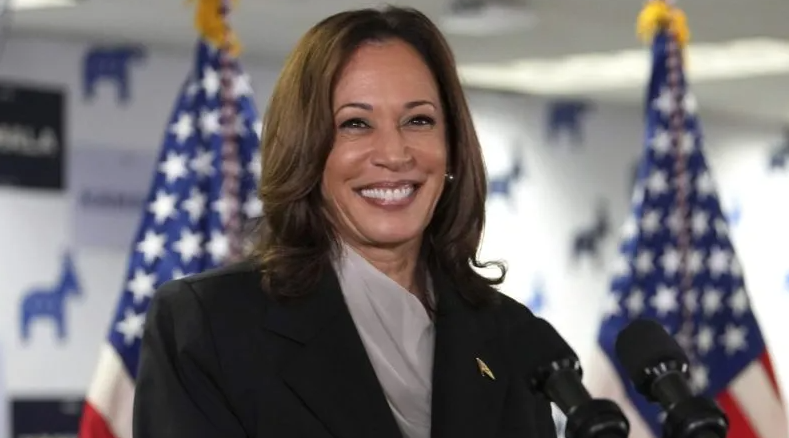
That booming popularity reached a new symbolic peak when then–presidential candidate Kamala Harris professed her fandom on The Howard Stern Show in October 2024. Discussing her interests outside of politics, Harris lit up when the topic turned to F1.
“It’s so good – we love it, our whole family does,” she said, brushing aside the notion that her interest was a campaign strategy. Despite her hectic schedule, she noted she tries to keep up, “depending on where they are driving, the time of day.”
Pressed on her favorite driver, Harris didn’t hesitate. “Lewis Hamilton, of course,” she said, noting the seven-time champion’s move away from Mercedes and encouraging Stern to give the sport a chance: “You might get hooked.”
F1’s American footprint has deep roots. The Indianapolis 500 was part of the original world championship from 1950 to 1960, and cities like Detroit, Dallas, and Long Beach have previously hosted races. Even the first Las Vegas Grand Prix took place in a Caesars Palace parking lot.
Looking forward, Formula 1’s director of race promotions, Louise Young, recently addressed the sport’s U.S. growth on the “James Allen on F1” podcast. While North and South America now host six events, Young stressed that the current U.S. trio is the long-term plan. Austin’s contract has been extended through 2034, Miami is locked in for years to come, and Las Vegas remains a major investment.
“There are probably some other destinations in the US that would be interested,” Young said, “but it then becomes a question of at what cost… So for now, three in the US is the plan.”
Still, if Formula 1 has proven anything in recent years, it’s that its American trajectory is accelerating — and there may be more surprises ahead.