A major step toward inclusive beauty standards is unfolding in New York, where new regulations will soon require cosmetology schools to teach students how to care for textured hair — a move advocates say directly addresses long-standing discrimination faced by women with natural hair.
Under updated rules issued by the New York Department of State, all cosmetology and hair-styling programs must incorporate training on kinky, coily, and curly hair into their curriculum by September.
The policy aligns with the state’s broader interpretation of the CROWN Act, which prohibits discrimination based on hair texture and protective styles.
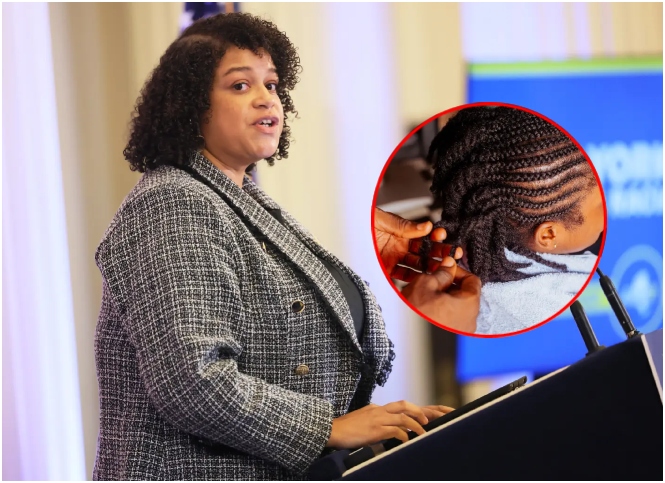
Centering Women’s Lived Experiences
For many women — particularly Black women — the policy reflects a deeper truth: hair discrimination has never been just about aesthetics, but about identity, professionalism, and acceptance.
State Assemblywoman Michaelle Solages, who co-authored the legislation, shared her own experiences of being told to straighten her hair to appear more “professional.”
“It’s a form of discrimination,” she said, pointing to salons that lack the skills or willingness to care for textured hair. “The person behind the chair should understand your hair.”
Her remarks echo a widespread reality for women who have long reported negative or even harmful salon experiences — from stylists refusing service to damaging natural hair due to lack of training.
What the New Rules Require
The updated curriculum will not extend training hours but instead integrate textured-hair education into existing coursework. Students pursuing cosmetology licenses — typically requiring 300 to 1,000 hours — will now receive:
- Instruction on hair analysis covering curly, coily, kinky, wavy, and straight textures
- Training in natural hair care, including hydration and moisture treatments
- Expanded lessons in braiding techniques and extension care
- Dedicated hours focused on styling curl and coil patterns
The goal is to ensure future stylists are equipped to serve all clients — not just those with straight hair.
A Broader Cultural Shift
The move comes amid increasing awareness of hair discrimination in workplaces, schools, and public spaces. The CROWN Act, now adopted in multiple U.S. states, has become a cornerstone in efforts to protect natural hairstyles such as afros, braids, and locs.
Recent legal action has further underscored the issue. A Black woman and her daughter recently filed a federal lawsuit alleging they were denied service at a salon because of their hair type — a case that highlights the ongoing need for systemic change.
Why It Matters for Women
For women navigating beauty standards, the implications go beyond the salon chair. Access to knowledgeable, respectful hair care is closely tied to confidence, self-expression, and even professional opportunities.
By embedding textured-hair education into licensing requirements, New York is taking a step toward normalizing natural hair — not as an exception, but as a standard.
Industry groups say schools are expected to comply without major disruption, suggesting the shift is both necessary and achievable.
For many women, the change signals long-overdue recognition: that all hair textures deserve care, expertise, and respect.