A federal judge has ordered the release of grand jury materials and appointment records connected to former Trump attorney Lindsey Halligan.
Halligan’s involvement in the criminal indictment of New York Attorney General Letitia James is now under scrutiny.
U.S. District Court Judge Cameron McGowan Currie issued the directive Tuesday, reports Raw Story, demanding “all documents relating to the indictment signer’s participation in the grand jury proceedings, along with complete grand jury transcripts,” to be submitted by Nov. 5.
The order follows a motion by James to dismiss the indictment, arguing that Halligan’s role as interim U.S. attorney was constitutionally improper.
James maintains that Halligan, a longtime ally of former President Donald Trump, was never legally authorized to act in the position—and therefore, any indictment she signed off on is void.
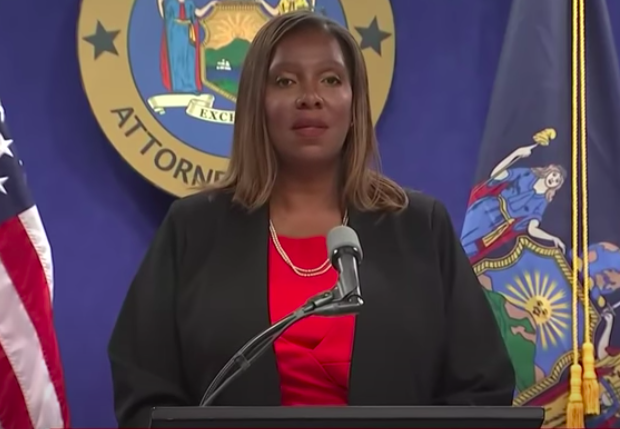
Currie said her request for the records was necessary “to determine the validity of the indictment and the extent of Ms. Halligan’s authority at the time of the grand jury proceedings.”
A Deepening Legal Quagmire
The controversy centers on Section 546 of U.S. law, which governs interim appointments of U.S. attorneys. Trump’s Justice Department used that provision to install Halligan after a previous prosecutor declined to indict James and former FBI Director James Comey, two of Trump’s most frequent critics.
Halligan’s appointment was made by then–Attorney General Pam Bondi, under a clause that permits temporary appointments lasting 120 days. However, Halligan’s predecessor, Erik Siebert, had already been appointed under the same statute—raising the question of whether a second consecutive interim appointment is even legal.
A recent court ruling involving former Trump lawyer Alina Habba concluded that Section 546 does not permit back-to-back interim appointments beyond the initial 120 days, reinforcing James’s argument that Halligan’s authority had expired when she signed the indictment.
Former federal prosecutor Patrick Cotter told Reuters the appointment appeared to “remove the legislative branch from the appointment process,” adding that “the Constitution says you can’t do that—that both branches have to be involved.”
Political Reverberations
For Letitia James, a figure who has long drawn Trump’s ire for her investigations into his business empire, the implications are immense. If Judge Currie ultimately determines that Halligan’s appointment was unlawful, James’s indictment could be tossed entirely, further eroding the credibility of the Trump-aligned Department of Justice officials who pushed for it.
Critics say the case reflects a broader pattern of politically motivated prosecutions carried out during and after Trump’s presidency—efforts that continue to reverberate through the judiciary.
“Once again, we’re seeing the residue of Trump’s politicized Justice Department play out in real time,” said one legal scholar familiar with the matter. “If this appointment is ruled invalid, it will affirm what many have suspected—that these cases were less about justice and more about retaliation.”
What Comes Next
Judge Currie’s order sets the stage for a pivotal hearing in early November. Depending on the findings from the grand jury records, the court could invalidate the indictment against James or allow proceedings to continue.
For now, Letitia James remains steadfast. Her legal team has emphasized that the case represents not just a fight for her personal vindication, but a test of whether the nation’s highest law enforcement institutions can operate independently of political influence.
As the court awaits the Nov. 5 submission deadline, the outcome could have sweeping implications for how interim prosecutors are appointed and whether Trump-era Justice Department actions will continue to withstand constitutional scrutiny.