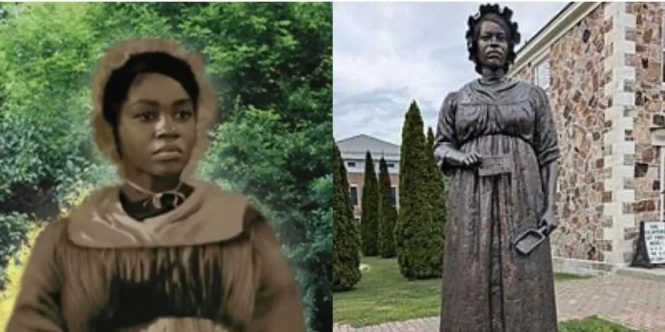
Before Harriet Tubman led enslaved people to freedom and long before Rosa Parks sat down on a Montgomery bus, there was Mum Bett — a woman whose courage in a Massachusetts courtroom in 1781 shook the legal foundation of slavery in America.
Known later as Elizabeth Freeman, she became the first Black woman in the United States to sue for her freedom and win, a decision that would ripple far beyond her own life and help end slavery in Massachusetts altogether.
Freeman’s story began not in the marble halls of power but in the kitchen of the Ashley household in Sheffield, Massachusetts. Born enslaved around 1742 in upstate New York, she was “given” to the Ashleys, a prominent local family.
For decades, she worked in their service — until one violent moment changed everything.
According to accounts, Annetje Ashley, the mistress of the house, once raised a heated fire shovel in anger to strike another enslaved person. Freeman intervened — and took the blow herself. It left both a physical scar and a moral conviction that she would not remain bound any longer.

“She had suffered enough,” said later biographer Catherine Maria Sedgwick, whose own family would become central to Freeman’s freedom. “And she had heard the words ‘all men are born free and equal.’”
Those words were not just lofty rhetoric to Freeman. They were the cornerstone of the newly ratified Massachusetts Constitution of 1780, and she recognized them as a legal weapon against her bondage. With the help of Thomas Sedgwick, a Stockbridge attorney and father of the novelist who would later tell her story, Freeman filed a freedom suit in the Berkshire County Court in 1781.
The court sided with her.
In a decision that predated national abolition by nearly a century, the jury declared that slavery was incompatible with the state’s constitution. Freeman and a fellow plaintiff named Brom were granted their freedom and awarded payment for court costs — a ruling that laid the groundwork for Quock Walker’s case, which soon after solidified the end of slavery in Massachusetts.
Freeman’s victory was revolutionary — not just legally but symbolically. Here was a Black woman, illiterate yet unyielding, who had the clarity to interpret the promises of liberty written by men who never intended those words to apply to her.
After her emancipation, Freeman remained with the Sedgwick family, this time as a paid servant and respected member of their household. She purchased her own home, raised a family, and lived freely for nearly five decades — a remarkable achievement for a woman born into slavery in colonial America.
When she died in 1829 at roughly 85 years old, she was buried in the Sedgwick family plot — the only nonwhite person interred there. Her headstone reads:
“She never violated a trust, nor failed to perform a duty. In every situation of domestic trial, she was the most efficient helper.”
Today, Elizabeth Freeman’s life is more than an entry in a history textbook. Her story — now featured in exhibits, poems, and films — is a vivid reminder that America’s earliest fights for freedom were often led by those who had the least of it.
As modern movements continue to confront racial and gender inequity, Freeman’s legacy endures as proof that the words “born free and equal” are not just ideals to be admired — but promises that must be demanded.