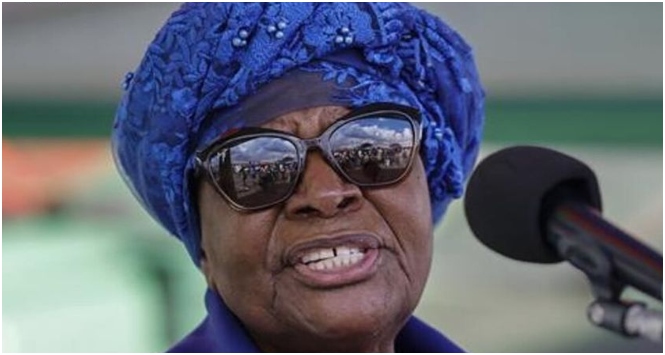
Namibia’s President, Netumbo Nandi-Ndaitwah, has been pulled into the heart of a social media storm after viral posts falsely claimed she had rejected a proposed Bill & Melinda Gates Foundation trial of a new hormonal intrauterine device (IUD) in the country.
The claims, which framed the supposed rejection as a bold stand against “population control,” quickly spread online under hashtags celebrating African sovereignty.
But the Namibian government has now set the record straight.
On its official X account, the presidency shared a screenshot of the viral claim with “FAKE NEWS” stamped across it.
Presidential spokesperson Jonas Mbambo confirmed to Namibian outlets that “no such proposal was ever submitted to or discussed by the Namibian government.”
He stressed that the presidency remains committed to evidence-based health initiatives and urged the public to verify facts before circulating misinformation.
What the Gates Foundation Is Actually Doing
Founded by philanthropists Bill Gates and Melinda French Gates, the Gates Foundation is one of the world’s largest private organisations dedicated to global health and poverty reduction.
While the foundation has long been the target of “trial-themed” health conspiracy theories — often tied to population control narratives — it has been open about its family-planning work.
Most recently, the foundation launched an affordable, long-term hormonal IUD in Africa, beginning with Kenya and Nigeria.
The contraceptive, designed to prevent pregnancy for up to eight years, is meant to expand options for women and girls in low- and middle-income countries.
An IUD is a T-shaped contraceptive device inserted into the uterus that can last three to 10 years depending on the type. While highly effective, IUDs and other long-acting reversible contraceptives (LARCs) have historically raised ethical concerns, especially in contexts where women’s consent has not been fully respected.
The Deeper Context: Family Planning and Autonomy in Africa
Mistrust around family-planning initiatives in Africa has deep historical roots. In Namibia and South Africa, there are documented cases of women — including those living with HIV — who experienced forced or coerced sterilisation. Globally, the development of IUDs has long been entangled with the population control and eugenics movements, leading to skepticism about modern contraceptive rollouts.
A review of LARC interventions in sub-Saharan Africa between 2000 and 2020 found that many programs tended to push long-acting methods as “successes” based on uptake numbers, rather than respecting women’s right to decline or seek alternatives. This approach risks undermining women’s autonomy, choice, and trust in healthcare systems.
Balancing Health Rights and Health Misinformation
Despite these concerns, the World Health Organization and the United Nations have affirmed that access to contraception is a human right.
Contraceptives reduce unintended pregnancies, lower maternal deaths, and cut the risk of unsafe abortions. They also play a role in preventing HIV transmission — though only condoms protect against sexually transmitted infections.
Contraceptives are not only about pregnancy prevention. Many women rely on them to manage medical conditions such as polycystic ovary syndrome and endometriosis, with added benefits of lowering certain cancer risks.
However, misinformation like the viral posts about Namibia has the power to derail informed health choices. It can discourage individuals from seeking verified medical care, distort public debates, and perpetuate distrust of much-needed interventions.
Why It Matters
For President Nandi-Ndaitwah — a trailblazer as Namibia’s first woman head of state — the misinformation underscores the dual challenge facing African leaders: protecting citizens from exploitative practices while also defending the right to evidence-based healthcare and autonomy.
While the viral claim was false, it tapped into real anxieties about reproductive justice, sovereignty, and the history of population control in Africa. The President’s office acted swiftly, but the episode is a reminder that misinformation can just as easily erode trust as strengthen resistance.
At its core, this story reflects both the power and vulnerability of Black women leaders in the global health debate. Their names, platforms, and voices are often drawn into controversies that sit at the intersection of health rights, history, and politics.