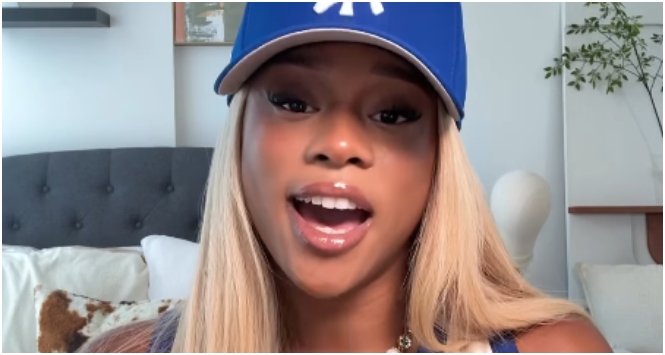
Digital creator Ki Peay is accusing another social media user of copying her content word for word, a practice she says disproportionately affects Black women working in highly competitive online spaces.
“When you’re stealing someone’s intellectual property, what does that say about you?” Peay asked in a recent Instagram video, after discovering what she described as direct reproductions of her original content.
The creator argued that the issue extends beyond social media etiquette and raises larger questions about ownership, attribution and the protection of creative work in an increasingly crowded digital marketplace.

According to Peay, the videos in question mirrored not only her ideas but also her exact wording, including personal finance advice she had previously shared with her audience.
Referencing one example, she compared her original video with the allegedly copied version, noting that both used nearly identical language and structure.
The discovery hit the creator hard, later writing that the situation “actually hurts,” given the effort she has invested in developing her platform and voice.
“When you’re stealing someone’s intellectual property, what does that say about you?” Peay asked in the video.
While she called for respectful dialogue, she also urged accountability, arguing that the issue extends beyond a single creator dispute.
“As a Black woman in a competitive industry, in an oversaturated industry, to have your content copied word for word, and you’re doing it to multiple Black women, this is more than just content creation,” she said. “This is dangerous.”
Peay’s comments tap into an ongoing conversation within the creator economy about content ownership, attribution and the challenges many creators face when their work is repurposed by others without credit.
As social media platforms continue to reward viral content and rapid production cycles, disputes over originality have become increasingly common. Creators frequently accuse others of reposting videos, duplicating scripts or recreating content formats without acknowledgment.
For many Black creators, however, the issue carries additional weight.
Advocates and researchers have long pointed to concerns that Black creators often set trends, develop viral formats and shape online culture, only to see their work replicated by larger accounts that receive greater visibility, engagement or financial opportunities.
Peay suggested that the alleged copying of content from multiple Black women reflects a pattern that many creators of color recognize all too well.
“This is something that constantly happens to women that look like me,” she said.
The controversy comes amid broader discussions about intellectual property rights in the digital age. While copyright protections can apply to certain creative works, proving ownership of short-form social media content can be challenging, particularly when disputes involve ideas, presentation styles or rewritten versions of existing material.
As the creator economy continues to evolve into a multibillion-dollar industry, questions surrounding originality, compensation and proper attribution remain central concerns for influencers, brands and platforms alike.
For Peay, the issue is not simply about a copied video. It is about protecting creative labor and ensuring that creators—especially Black women working in highly competitive online spaces—receive recognition for the work they produce.
“This is more than just content creation,” she said. “This is dangerous.”