
A viral video by podcaster and commentator Nikki Free is putting a spotlight on the recent incidents of deadly violence against Black women.
“We don’t have a mystery. We have a pattern,” she describes the situation in her signature blunt and thought-provoking commentary.
The widely shared clip, posted on Instagram, challenges how society frames killings of Black women, arguing that what is often labeled as “domestic violence” should be more accurately recognized as femicide.
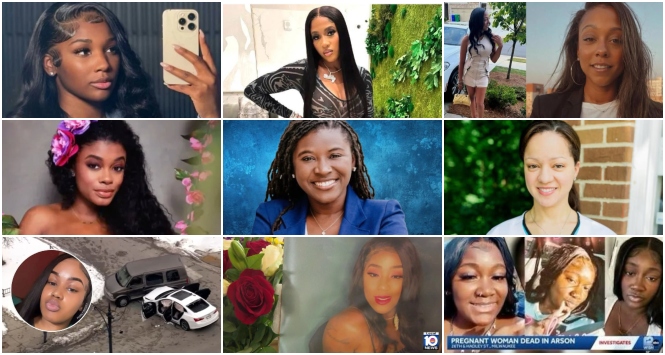
Drawing on data and recent headlines, Free highlights a disturbing consistency: the majority of Black women killed are murdered by men they know, often intimate partners such as husbands, boyfriends, or ex-partners.
Citing statistics from the Violence Policy Center, she notes that nearly nine out of ten Black women killed by men knew their attacker. In more than half of those cases, the perpetrator was a current or former partner.
“The data doesn’t flinch,” she said, explaining that these killings are not random but follow identifiable patterns of control, jealousy, isolation, and escalating violence.
Free’s commentary also points to systemic shortcomings, arguing that these deaths represent a broader “protection failure” and “prevention failure.”

Referencing findings from the Centers for Disease Control and Prevention, she noted that Black women experience some of the highest homicide rates in the United States, with firearms frequently involved. Despite this, she contends that responses remain inadequate, with warning signs often overlooked and intervention coming too late.
Her remarks echo decades-old observations by Malcolm X, who famously described Black women as among the most disrespected and unprotected groups in America. Free argues that the persistence of such realities underscores a societal failure to act decisively.
“If this many women from any other group were dying at this rate… we would be deploying resources,” she said, calling for a shift from passive awareness to active prevention.
As the video continues to circulate globally, it has sparked renewed calls for policy reform, better protection systems, and a reframing of how gender-based violence, particularly against Black women, is understood and addressed.
For many, the message is clear: the issue is not a lack of information, but a lack of urgency in responding to a crisis that has long been visible.

