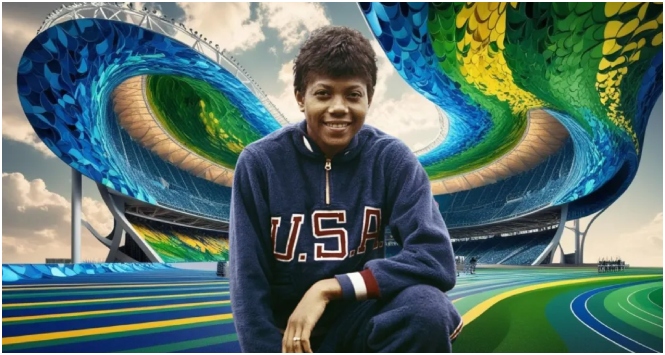
When the world remembers Wilma Rudolph, it’s not just as a sprinter but as a symbol of resilience, determination, and triumph against impossible odds.
Known as the “fastest woman in the world”, Rudolph became the first American woman to win three gold medals in a single Olympic Games, shattering records and expectations alike.
A Childhood of Hardship

Born on June 23, 1940, in St. Bethlehem, Tennessee, Rudolph was the youngest of 22 children. Her early life was marked by poverty and devastating illnesses.
At just four years old, she contracted polio and was told by doctors she would never walk again. She also battled scarlet fever and double pneumonia, illnesses that threatened her survival.
But Rudolph’s spirit was unbreakable. By age 12, through sheer determination and relentless physical therapy, she regained the ability to walk. Soon after, she discovered a love for running—a passion that would propel her into global history.
Rising to the World Stage

Rudolph’s athletic potential was spotted early by coach Ed Temple of Tennessee State University. At just 16, she qualified for the 1956 Melbourne Olympics, winning a bronze medal as part of the 4×100-meter relay team. But her true breakthrough came four years later.
At the 1960 Rome Olympics, Rudolph stunned the world by winning three gold medals—in the 100 meters, 200 meters, and 4×100-meter relay—becoming the first American woman to achieve this feat. Her dazzling speed earned her global fame and the title of “the fastest woman on Earth.”
Her victories also carried deep symbolic weight. As an African American woman succeeding at the height of the Civil Rights Movement, her triumphs challenged racial and gender barriers while inspiring a generation.
Beyond the Track

After her Olympic career, Rudolph used her platform to advocate for civil rights and women’s equality in sports. She became a coach, educator, and mentor, proving that her impact extended far beyond medals.
Rudolph’s message was clear: success isn’t just measured by athletic achievement but by how one uses their influence to uplift others.
Lessons from a Legend
Wilma Rudolph’s story is more than history—it’s a blueprint for resilience. She taught the world to:
- Refuse to let others define your limits.
- Believe in yourself even when no one else does.
- Turn obstacles into motivation.
- Use success to inspire and empower others.
Her journey from a child once told she would never walk to a woman who outran the world remains one of the greatest stories in sports history.
Legacy
Rudolph passed away in 1994 at the age of 54, but her legacy continues to inspire athletes, leaders, and dreamers everywhere. Her life is a reminder that greatness comes not just from talent, but from the unyielding will to persevere.