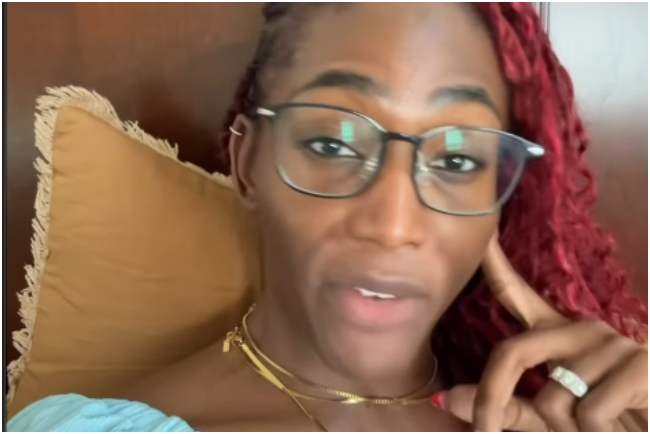
A widely shared Instagram post by writer and activist Hope Giselle-Godsey has ignited intense discussion online about race, empathy, and selective outrage in the wake of controversial Immigration and Customs Enforcement (ICE) activities in Minnesota.
In a post shared on her Instagram account @hopegiselle, Giselle-Godsey challenged what she described as a sudden political “awakening” among some Americans following recent ICE-related violence, arguing that similar harm inflicted on Black, Brown, immigrant, and marginalized communities for years failed to generate the same urgency or public response.
“Some of y’all didn’t wake up because you finally understood the system,” she wrote. “You woke up because the system finally looked like you.”

Calling Out Proximity-Based Empathy
Accompanying the post was a video in which Giselle-Godsey spoke candidly—and emotionally—about her frustration with what she sees as proximity-based empathy: public concern that only emerges when injustice affects people who are racially or socially familiar.
Without naming individuals, she pointed to recent ICE incidents involving white victims as a turning point that prompted protests, organizing, and widespread alarm—responses she says were largely absent when similar actions affected immigrants, non-English speakers, trans women, and poor communities.
Her message did not reject new allies outright but questioned the motivations behind their engagement.
“Some people aren’t activated,” she said. “They’re scared—and fear made them loud in a way justice never could.”
A Challenge to Movement Leadership and Historical Amnesia
Giselle-Godsey also warned against latecomers attempting to lead movements they previously ignored. She urged those newly engaged to first reflect on their absence, learn the history of resistance led by marginalized groups, and respect existing leadership structures.
She framed discomfort not as something to avoid, but as a necessary step toward accountability and genuine solidarity.
“Movements don’t grow from pretending we’ve always been here,” her post stated. “They grow when people admit when they weren’t.”
Widespread Reaction Online
The post has been widely circulated across social media, drawing both praise and criticism. Supporters described it as an overdue and honest reckoning with racial double standards in public outrage and political mobilization.
Critics, however, accused Giselle-Godsey of alienating potential allies or deepening divisions at a moment of heightened tension.
Despite the polarized reactions, the post has become a focal point in broader conversations about race, activism, immigration enforcement, and who is deemed worthy of protection and urgency in the United States.
As debates over ICE operations and federal enforcement tactics continue, Giselle-Godsey’s message has underscored a recurring question in American social movements: what finally makes injustice visible—and to whom?