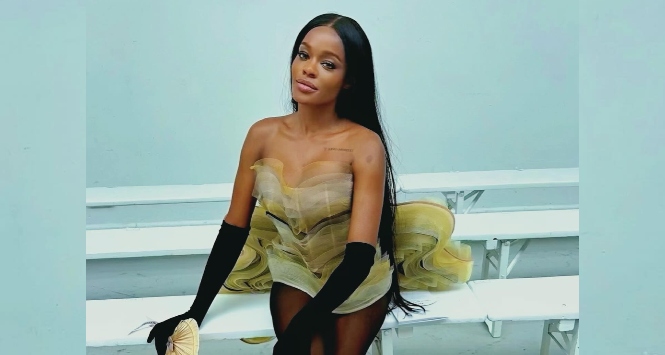
Azealia Banks is revealing that a DNA ancestry test showed she has Nigerian, specifically Yoruba, heritage. Her revelation sparked comments that quickly reignited old tensions with fans across social media.
The revelation surfaced after the rapper, known for her outspoken online presence, shared that her ancestry results traced part of her lineage to Nigeria. While the discovery of African heritage is often met with celebration, Banks’ reaction took a different turn. She expressed disappointment, stating she had hoped her results would point to Congolese roots instead.
“Sadly- it turns out i am a Nigerian..And a Yoruba Nigerian,” she wrote on X, adding another remark that intensified reactions online: “But i am happy im Yoruba. From Yorubaland…. not the niggerarea.”
The comments spread quickly and triggered a wave of backlash, particularly from Nigerian users on X who felt her remarks were dismissive and disrespectful. The reaction was especially strong given Banks’ history of publicly criticizing Nigerian culture.
Over time, Banks has made several controversial statements about Nigeria and Afrobeats, including describing Afrobeats as “not culturally rich,” calling Nigerians “very limited,” mocking jollof rice, and accusing Nigerians of being “cold-hearted” and “scammers.” Those past comments resurfaced as her DNA revelation circulated, fueling even more frustration among critics online.
Social media users did not hold back in their responses. One user wrote, “You are not Yoruba, we don’t want your foolish self. Yoruba people created afrobeats that you insult today, you foolish Femco.” Another commented, “Sorry you ain’t using Nigeria for clout … you are American , stay American …”
Others added their own sharp reactions, with one saying, “On behalf of all Yorubas, we do not want you… & with that being said, we would like to send you to our brothers the Igbos, we hope they can keep you.” Another user questioned the entire discourse, writing, “Who the fuck is this one again? Abeg make somebody tell me who she be.”
The online exchange has once again placed Banks at the center of a broader conversation about identity, ancestry, and cultural respect within the African diaspora.