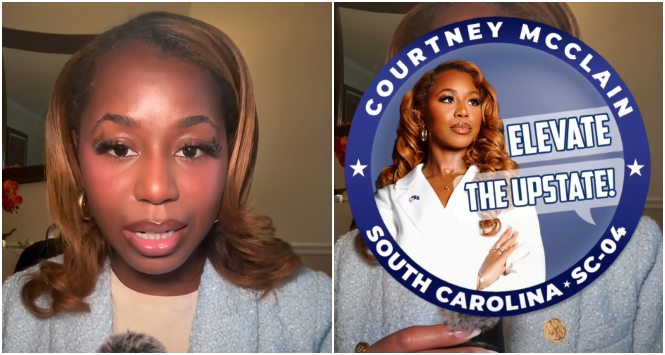
Democratic congressional candidate Courtney McClain is celebrating what she describes as a major political and voting rights victory in South Carolina after efforts tied to redistricting and proposed election changes were halted following record voter turnout across the state.
In a campaign video shared online, McClain declared that South Carolina voters had successfully pushed back against political maneuvers that many critics believed could have disrupted the state’s congressional election process.
“South Carolina, we showed up, fought back, and beat redistricting,” McClain said. “Today, it is officially dead in our state.”
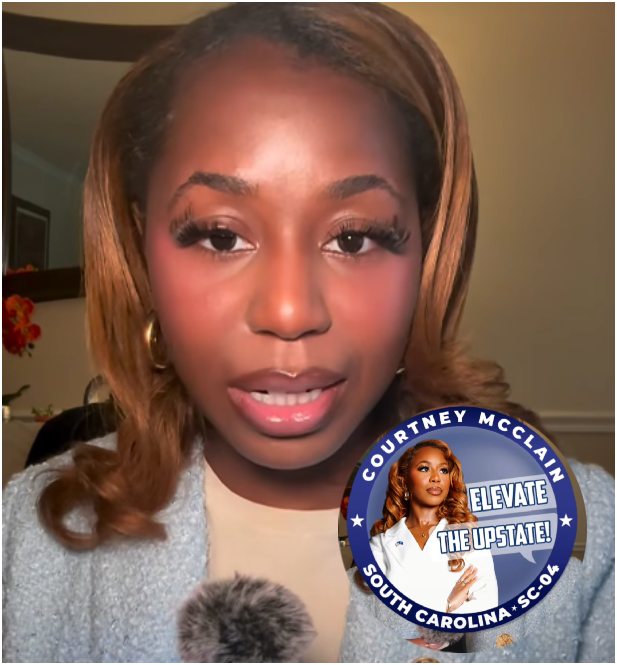
Her comments come amid intense political battles nationwide over congressional maps, voting access, election administration, and redistricting disputes that have increasingly become central legal issues ahead of upcoming federal elections.
McClain, who is running for South Carolina’s 4th Congressional District representing Greenville and Spartanburg, tied the outcome directly to voter participation and civic engagement.
“We have set record voter turnout, sending a clear message that the race ahead is not going to be business as usual,” she said.
The controversy in South Carolina centered around legislative efforts that critics argued could have altered election timelines and redrawn district maps while early voting was already underway. Opponents contended that such changes risked voter confusion and raised broader legal concerns regarding election fairness, voting rights, and electoral access.
McClain framed the defeat of those efforts as proof that voter mobilization can directly influence legal and political outcomes.
“South Carolina, we are the state that fought back and won because your vote has power,” she said.
The debate reflects a broader national legal battle over redistricting and voting rights that has intensified in recent years following multiple court decisions involving congressional maps, racial representation, and state election authority.
Voting rights advocates across the country have increasingly warned that changes to district boundaries and election procedures can disproportionately affect minority voters and reduce political representation in rapidly changing regions.
At the same time, state lawmakers defending redistricting efforts often argue that map revisions and election adjustments are legally permissible exercises of legislative authority.
McClain’s remarks also signal growing Democratic efforts to energize voters in traditionally conservative Southern states by focusing on voting rights, turnout, and grassroots political organizing.
“The South has something to say,” she declared near the end of the video.
Her campaign now moves toward the November general election, where turnout and voting access are expected to remain central political and legal issues not only in South Carolina but nationwide.