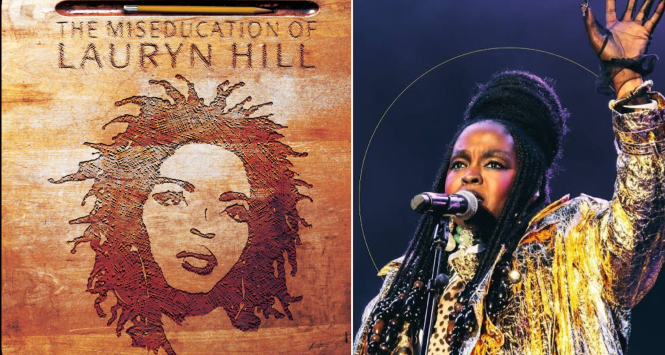
More than two decades after releasing The Miseducation of Lauryn Hill, Lauryn Hill is addressing the question fans continue to ask: why has there never been another studio album?
The Grammy-winning artist recently jumped into the comments section of an Instagram post shared by FRAIM World, which discussed possible reasons Hill never released a follow-up to her landmark 1998 project. The post suggested that factors such as creative conflicts, industry pressure, and exhaustion tied to fame may have contributed to her long absence from traditional album releases.
Hill quickly made it clear she did not fully agree with the conversation surrounding her career. Her first response was short and direct: “I disagree.”
But she did not stop there.
The singer later returned with a lengthy explanation, giving fans a rare glimpse into the emotional and creative realities she says shaped her experience after the success of The Miseducation of Lauryn Hill.
“When you’re inspired and desire to be principled, what doesn’t get talked about enough is the drain… nor the challenge to find safety so that you can create with integrity,” Hill wrote.
She continued by explaining that success in the music business often shifts attention away from artistry and toward profit.
“Most see opportunity as dollars only and often exclude the ‘sense,’” she added. “The Score nor the Miseducation were made because we were ‘allowed’ to represent what we did, we fought for every inch.”
Hill also reflected on how commercial success can change the creative process itself. According to her, the pressure that comes after a major breakthrough can slowly damage the art when money and outside interests begin to take over.
“Wild success can cause greed that begins to degenerate the art for the money,” she wrote. “We’re people living through all this.”
As her message continued, Hill called for more understanding around the complicated realities artists face behind the scenes. She described herself as a “Harriet Tubman figure,” explaining that she often felt she was pushing difficult truths into spaces that resisted them.
“I was running to speak the difficult truth to power before certain forces tried to close those doors,” she said.
Hill also questioned why the kind of creative freedom and expression she represented during her rise is less visible in today’s mainstream music landscape.
“If it was so easy to do, where is that expression now on the world stage?” she asked. “Systems fear what they can’t control. Creativity is most potent when it’s free.”
Despite not releasing another studio album, Hill said she still believes her impact reshaped what artists thought was possible.
“If I did nothing else, I introduced standards and possibilities to a generation that didn’t know they could operate on that level before then,” she wrote.
This is not the first time Hill has opened up about the complicated aftermath of The Miseducation of Lauryn Hill. During a 2021 interview with Rolling Stone, she revealed that support from her label after the album’s success was nearly nonexistent.
“The wild thing is no one from my label has ever called me and asked how can we help you make another album, EVER,” Hill said at the time.
She explained that the environment surrounding her changed dramatically after her breakout success. While creating The Miseducation of Lauryn Hill, Hill said she felt free to experiment creatively. Afterward, however, she says she faced industry politics, pressure, and resistance from people who tried to shape her story for their own benefit.
“After The Miseducation, there were scores of tentacled obstructionists, politics, repressing agendas, unrealistic expectations, and saboteurs EVERYWHERE,” she shared.
Even after all these years, Hill’s comments show that the story behind one of hip-hop and R&B’s most celebrated albums remains deeply personal for the artist who created it.