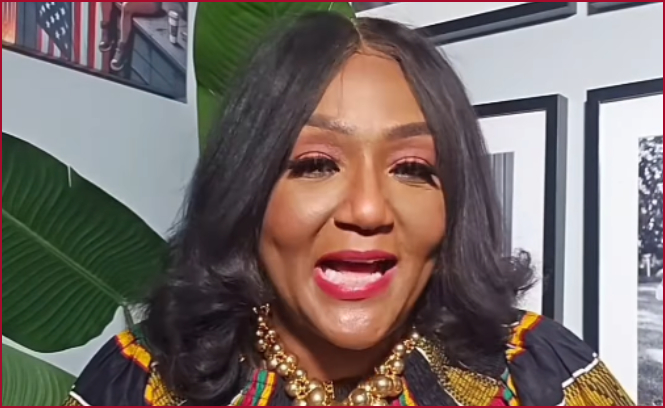
An Oakland commentator is drawing sharp attention to the struggles of white South African refugees admitted under a controversial Trump program.
Nikki Free is arguing that many White families were brought to the United States not for protection, but for politics.
“They were told America would protect them. They were told they were victims. They were told they would be safe,” said Nikki Free in a widely shared Instagram post. “They were not rescued. They were recruited.”
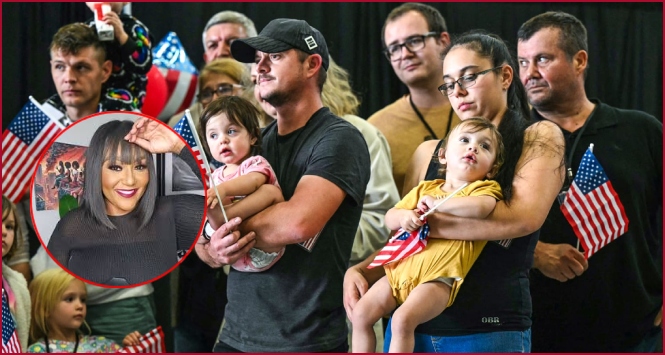
Free’s remarks follow reports that some Afrikaner families admitted under a 2025 executive order are now living in unsafe or mold-infested housing, struggling to afford food, and receiving limited resettlement support.
A Promise vs. Reality
Under the policy championed by former President Donald Trump, more than 1,600 Afrikaners were fast-tracked into the United States by early 2026 after claiming persecution in South Africa.
The initiative, framed by supporters as humanitarian relief, was criticized internationally. The South African government rejected claims that white citizens were facing systematic racial persecution, calling the narrative false.
Free argues that the program was never about vulnerability — but optics.
“This was never about helping refugees,” she said in her video. “It was about creating a narrative.”
According to background reports, while thousands applied, many arrivals now face serious integration challenges, including placement in low-quality housing and inadequate financial assistance.
Propaganda Doesn’t Pay Rent
In her commentary, Free described families living in “mold-filled apartments” in unsafe neighborhoods and walking long distances to buy groceries.
“This isn’t what Trump promised them,” she said. “But it’s what Trump gave them.”
Federal refugee resettlement programs typically provide limited short-term assistance, with the expectation that families quickly transition to self-sufficiency. Advocates say that in many cities — particularly where housing costs are high — that timeline is unrealistic.
Despite federal funding allocated to resettlement agencies, reports suggest some Afrikaner families have relied heavily on churches and local community groups for food and essentials.
A Policy Under Scrutiny
The Afrikaner refugee initiative marked a significant shift in U.S. refugee admissions, prioritizing a largely white demographic group from a stable democratic nation — a move critics called unprecedented.
Faith leaders and immigration advocates questioned why this group received expedited access while refugees fleeing war zones faced prolonged vetting and delays.
Free framed the situation as an example of political storytelling colliding with economic reality.
“Political theater doesn’t fill refrigerators,” she said. “Promises from manipulators don’t survive reality.”
Beyond the Rhetoric
While Free’s language is pointed, policy experts note that resettlement challenges are not unique to Afrikaner refugees. Housing shortages, inflation, and overstretched support systems have affected refugee communities nationwide.
Still, the controversy surrounding this program adds another layer to an already polarized immigration debate.
For the families at the center of it, the issue is less about politics and more about survival.
“They came here chasing white victimhood,” Free said. “And found American reality.”
As scrutiny intensifies, the Afrikaner resettlement program demonstrates how immigration policy, shaped by narrative, may falter when confronted with the practical demands of rebuilding lives.