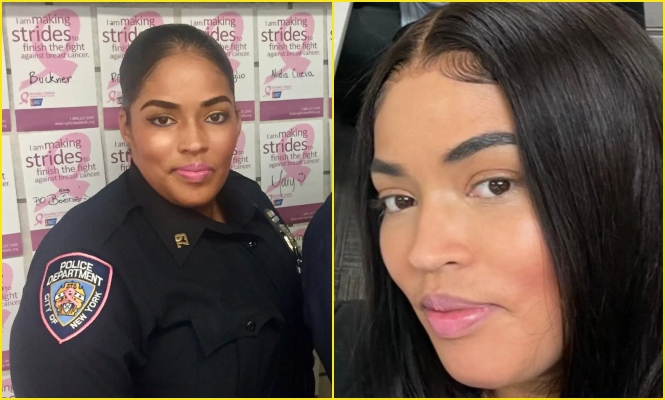
A New York police detective and mother of three has died while recovering from a Brazilian Butt Lift (BBL) procedure in Cali, Colombia.
The tragedy has reignited debate about the growing number of Americans seeking cosmetic surgery abroad.
Detective Alicia Stone, 40, a 13-year veteran of the NYPD’s Internal Affairs Bureau, traveled to Colombia on October 16 for liposuction and a gluteal fat transfer. The procedure, commonly known as a BBL, involves removing fat from other areas of the body and injecting it into the buttocks.

Stone was reportedly recovering in a hotel when she was found unresponsive around 6:30 a.m. on Oct. 23. She was rushed to Fundación Valle del Lili Hospital but was pronounced dead less than an hour later.
According to Colombian authorities, her cause of death was listed as “unspecified cardiac arrest.” Police sources say she had been taking anticoagulants (blood thinners) and pain medication as part of her post-surgery recovery plan.
Her husband, Michael Stone, told reporters he was blindsided by the call informing him of his wife’s passing.
“Something just doesn’t add up,” he said. “The doctor called and told me my wife had passed away but didn’t have any answers. I don’t have the facts — and that’s what I need.”
Michael described Alicia as a “beautiful, hardworking woman” who was “perfectly fine” before the procedure. She had reportedly spoken to family members the day before her death and seemed to be recovering well.
A Rising Trend With Deadly Risks
Experts say BBL surgeries remain among the most dangerous cosmetic procedures in the world. The American Society of Plastic Surgeons warns that one in every 3,400 patients may die from complications, often caused by fat entering the bloodstream and triggering a fatal embolism.
Despite repeated safety warnings, medical tourism for cosmetic surgery continues to rise, driven by significantly lower costs abroad. A BBL in the U.S. can cost upwards of $10,000, while in countries like Colombia, the same procedure can be done for less than half that price.
However, those savings can come at a steep cost.
“Even in reputable clinics, post-surgical complications are harder to manage when patients are far from home,” said one New York-based plastic surgery consultant. “The lack of consistent follow-up care is what often turns a routine recovery into a tragedy.”
A Dedicated Officer and Loving Mother
Colleagues within the NYPD are mourning the loss of one of their own. A fundraiser organized for Stone’s family described her as a “loving mother of three and a dedicated public servant who spent her career protecting and serving others.”
“Alicia’s kindness, courage, and compassion touched everyone she met, both in and out of uniform,” the statement read. “Her unexpected passing has left a tremendous void in the lives of her family, friends, and fellow officers.”
Authorities have contacted the U.S. State Department and Colombian National Police to assist in investigating the circumstances surrounding her death. Michael Stone said he has requested a full autopsy and that an NYPD detective has been sent to Colombia to aid the inquiry.
A Call for Accountability and Awareness
Alicia Stone’s death underscores the dangers of unregulated medical tourism and the complex web of accountability that arises when patients die abroad. Legal experts note that cross-border medical negligence cases are difficult to pursue due to jurisdictional limits and differing medical standards.
Still, advocates say her story should serve as a wake-up call.
“Too many women are dying in pursuit of beauty ideals reinforced by social media,” one legal analyst said. “What’s needed now isn’t judgment — it’s reform, transparency, and better protection for patients, both at home and abroad.”
Alicia Stone’s story is a haunting reminder of how easily a life dedicated to serving others can be cut short.