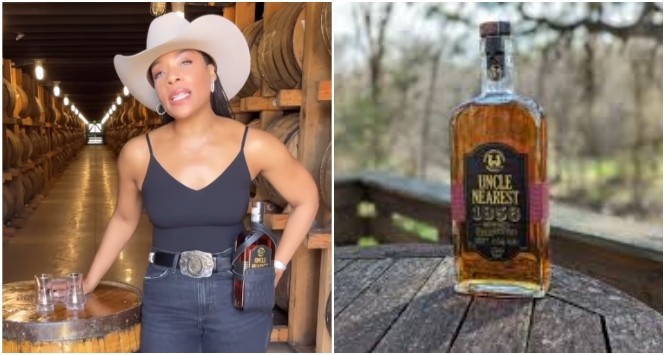
The founders of Uncle Nearest Premium Whiskey have asked a federal judge to terminate the receivership placed over the company, arguing that the court-appointed oversight has damaged sales, shaken distributor confidence, and threatened the long-term health of the Black-founded spirits brand.
According to The Lynchburg Times, Fawn Weaver and Keith Weaver filed a motion in the U.S. District Court for the Eastern District of Tennessee seeking to dismantle the receivership imposed in August 2025. Uncle Nearest—once valued at more than $1 billion—was placed under receivership after its lender, Farm Credit Mid-America, alleged the company defaulted on more than $108 million in loans.

As previously reported, Farm Credit claimed the whiskey maker’s financial position was misrepresented, allegations the Weavers have consistently disputed. Central to the lender’s claims is an assertion that Uncle Nearest’s former chief financial officer, Mike Senzaki, inflated barrel inventory figures, which allegedly led to a $24 million increase in the company’s credit line.
U.S. District Judge Charles E. Atchley Jr. appointed Tennessee attorney Phillip G. Young Jr. as receiver, granting him control over Uncle Nearest’s Shelbyville, Tennessee distillery, real estate holdings, intellectual property, and affiliated entities. Young has since worked with investment bank Arlington Capital Advisors to explore refinancing options and the possible sale of “substantially all” of the company’s assets.
In their latest filing, submitted ahead of the Christmas holidays, the Weavers argue that the receivership is no longer justified and is actively harming the business. They claim Uncle Nearest’s assets exceed its outstanding debt and insist there is no evidence that they or current management mismanaged company finances.
The founders also contend that sales volume has declined sharply since the receivership began, citing reduced distributor confidence and weakened retailer commitments. According to the filing, these disruptions stem directly from uncertainty created by court supervision rather than from the company’s underlying operations.
“The company can operate in the ordinary course of business,” the Weavers argue, adding that barrel counts are accurate and the collateral securing Farm Credit’s loans is sufficient.
The motion also addresses allegations that the Weavers used company funds to purchase a $2.25 million home on Martha’s Vineyard. The filing states that the property is not part of the loan collateral and that Farm Credit was fully aware of this arrangement.
The Weavers had previously attempted to challenge the receivership in order to regain authority over litigation and dispute responses. However, Judge Atchley Jr. denied that effort, ruling that only the receiver has the power to direct legal action on behalf of Uncle Nearest Inc., Nearest Green Distillery Inc., and Uncle Nearest Real Estate Holdings, LLC.
If the court grants the latest request, the receivership would be dissolved, restoring control to Uncle Nearest’s board and allowing the company to formally contest the lender’s allegations through defenses and counterclaims.
The case has drawn close attention within the spirits industry and among Black-owned businesses, given Uncle Nearest’s rapid rise, cultural significance, and the high financial stakes involved. A ruling on the motion could determine not only the company’s future ownership and governance but also whether it can stabilize operations after months of legal and financial uncertainty.