
A viral social media video by influencer Jessica Wong is sparking renewed debate about race and belonging in Miami, challenging the assumption that diversity alone eliminates discrimination.
In her widely shared Instagram post, Wong argues that racism can and does exist in cities where white residents are not the dominant group, a reality she says many people overlook when considering places like Miami.
It Can Be, Depending on Where You Are
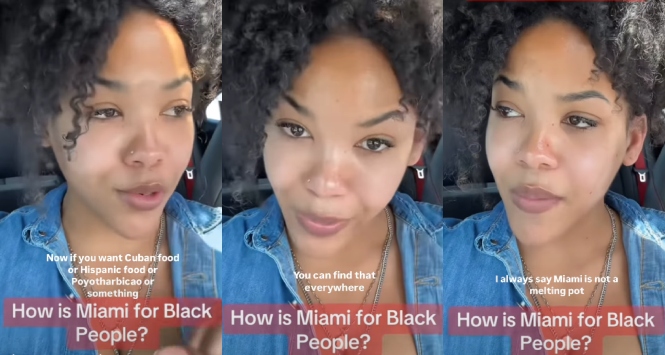
Addressing viewers directly, Wong posed the question: Is Miami racist? Her answer was layered.
“It can be, depending on where you are,” she said, pointing to personal experiences in restaurants and nightlife spaces where she felt treated differently or unwelcome.
In one instance, she described being turned away from a club because there were “too many Black people” in her group, an experience that, while not constant, she said reflects an underlying issue.
Challenging Assumptions About Diversity
Wong’s central argument challenges a common perception: that racism is primarily a feature of predominantly white spaces.
She stated that Miami, known for its strong Hispanic cultural identity, demonstrates how bias and discrimination can exist across different communities.
“Just because it’s not predominantly white people here does not mean that other groups do not have discriminatory ideologies,” she said.
Cultural Diversity Without Full Integration
Describing Miami as a “tossed salad” rather than a melting pot, Wong explained that while the city is rich in cultural diversity, those cultures often operate in parallel rather than blending seamlessly.
She noted that Black residents and visitors frequently gather in specific “pockets”, curated social spaces where they feel more accepted, rather than experiencing equal access across the city’s social scene.
This dynamic, she suggested, is partly a response to inconsistent experiences in more mainstream or affluent areas.
Impact on Social Behavior
Wong’s observations highlight how perceived or experienced discrimination can shape everyday decisions.
Many Black residents, she said, intentionally choose venues and neighborhoods where they expect a sense of belonging, avoiding spaces where they may face bias or exclusion.
Her comments reflect broader sociological patterns in urban environments, where informal segregation can persist even in diverse populations.
Online Reaction and Broader Debate
The video has triggered a wave of responses online, with some users echoing Wong’s experiences and others pushing back, arguing that Miami remains one of the most multicultural cities in the United States.
Still, the discussion has amplified a key point: diversity does not automatically translate to equity or inclusion.
A More Nuanced Conversation
While Wong acknowledged Miami’s appeal, from its beaches to its nightlife, her critique centers on a deeper issue: how race and power dynamics operate beneath the surface of a globally celebrated city.
Her message resonates beyond Miami, contributing to a wider national conversation about how racism manifests in complex, multicultural societies.