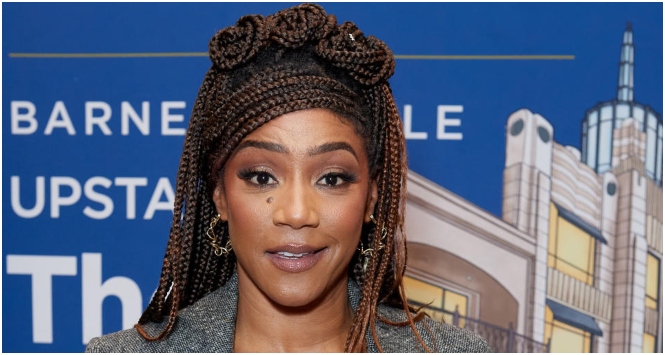
Comedian and actress Tiffany Haddish is facing intense criticism following viral comments in which she claimed that women with more than two baby daddies “usually have some sort of mental illness,”.
She cites unverified theories about DNA retention, stem cells, and genetic modification from male partners during pregnancy.
In a recent conversation on the Godfrey Podcast, Haddish presented what she called a personal “theory,” asserting that each pregnancy genetically alters a woman’s body, and that carrying children by multiple men leads to “mental stress” and spiritual struggle due to the presence of “too many bloodlines.”
“Every time you get pregnant, stem cells from that baby end up behind your eyes, in your brain, your heart, and lungs,” Haddish said. “Those stem cells always stay with you… So that man is always in you.”

She went on to argue that unprotected sex allows a man’s DNA to “bind” to a woman, claiming it takes six weeks for the body to “clear him out.”
She tied these ideas to biblical references and suggested that women with multiple children from different fathers exhibit emotional instability, spiritual imbalance, and mental health challenges.
Social Media Reaction and Scientific Scrutiny
The remarks quickly drew condemnation online, with many users accusing Haddish of stigmatizing single mothers and spreading pseudoscience.
Medical experts also weighed in, challenging her interpretation of fetal microchimerism—a real phenomenon where small numbers of fetal cells may remain in a mother’s body after pregnancy. However, scientists say there is no evidence linking this to mental illness or behavioral changes.
“While fetal microchimerism is scientifically documented, it does not support the far-reaching psychological or spiritual claims made in Haddish’s comments,” said one reproductive health researcher. “These statements can dangerously misinform the public, especially vulnerable communities.”
Mental Health Advocates Respond
Mental health professionals expressed concern that Haddish’s theory reinforces harmful stereotypes about women—particularly Black women—who are often disproportionately judged for family structure and reproductive choices.
“It’s not only unscientific but deeply irresponsible to casually associate mental illness with having children from multiple partners,” said Tameka Griffin, a licensed clinical therapist. “This kind of rhetoric perpetuates stigma and distracts from real conversations about trauma, access to care, and support systems.”
Comedian’s Controversial Past
This isn’t the first time Haddish has sparked debate with off-the-cuff theories. Known for her unfiltered humor and blunt delivery, the Emmy Award-winning actress has also faced scrutiny over past remarks involving relationships, race, and spirituality.
As of publication, Haddish has not issued a follow-up statement addressing the backlash.