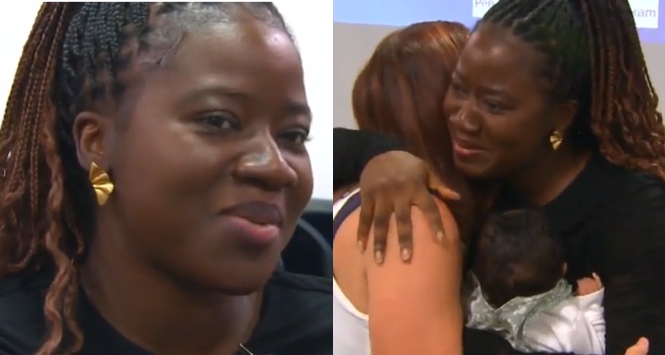
Two Pennsylvania women were brought together this week by a groundbreaking medical procedure and the baby girl whose life it made possible.
On Tuesday, July 8, 2025, Emma Dolzal, 33, of York County, met Sara Leister, 40, of Lancaster County—the woman who donated her uterus so Dolzal could become a mother through Penn Medicine’s uterine transplant program.
The emotional meeting, captured exclusively by WGAL News 8 reporter Meredith Jorgensen, marked the first time Dolzal and Leister had seen each other in person. Between them was baby Olivia, the eighth child born through Penn Medicine’s uterine transplant program and a symbol of both medical innovation and human generosity.
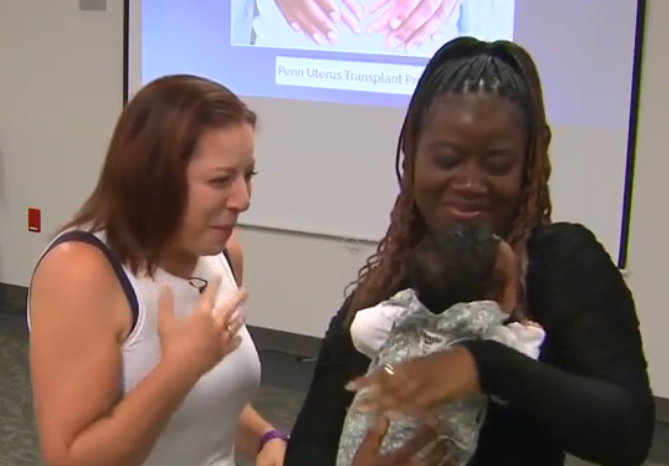
Dolzal, a Black woman who was born without a uterus, had long feared she would never be able to carry a child. That changed when she learned about a clinical trial for uterine transplants at Penn Medicine. She was accepted into the program, and her path to motherhood began.
“I get to see a part of my miracle face-to-face,” Dolzal told WGAL. “This is a beautiful moment. This is a moment that I’ve been looking forward to.”
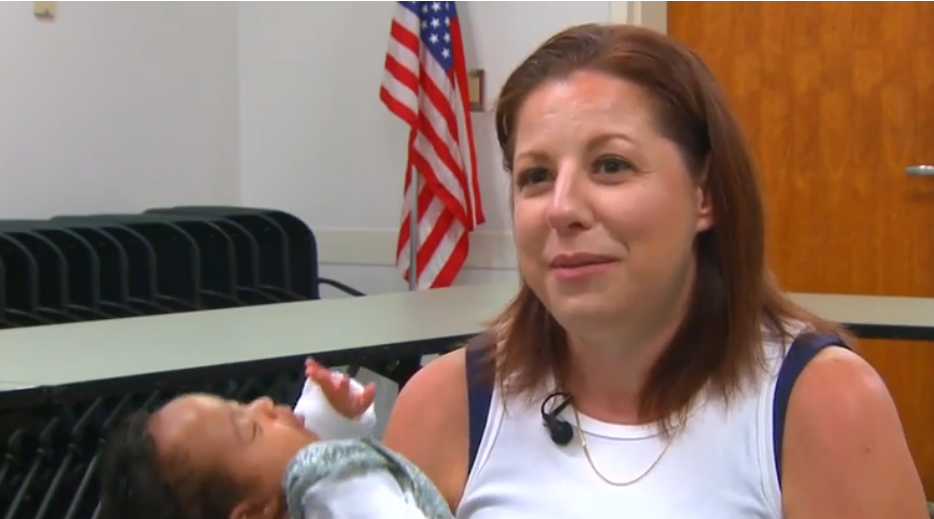
Leister, a nurse and mother herself, had heard about the transplant trial and applied to become a living donor.
“I think there’s just a part of me that knew there was going to be a baby at the end,” she said. “And here she is. And it’s amazing.”
Penn Medicine’s uterine transplant program, one of the few in the country, was once only available to participants in a clinical trial. As of this year, the program has moved beyond its trial phase, making the surgery accessible to more women who meet eligibility requirements.
Dr. Kate O’Neill, who performed the transplant, said the procedure’s availability is transforming what’s possible for women living with uterine factor infertility. “To be able to create more amazing moms is really something special for me,” O’Neill said.
“So many people don’t even realize you can be born without a uterus,” she continued. “Now there is a procedure that might be available to help you carry a child.”
While Penn Medicine covered the cost of Dolzal and Leister’s procedures, the transplant process, including in vitro fertilization, surgery, and pregnancy, can be expensive and is not always covered by insurance. However, that is beginning to change as awareness and acceptance grow.
For Dolzal, the journey was deeply personal.
“I will tell [Olivia] that Sara made this possible for us,” she said. “It’s just amazing for someone to want to donate and give this opportunity to other women.”
Both women hope their story will raise awareness about uterine transplant surgery and encourage others to consider becoming donors. Information on how to get involved is available on reporter Meredith Jorgensen’s Facebook page.
The meeting between Dolzal and Leister was filled with gratitude and awe, and baby Olivia, completely unaware of her role in medical history, beamed as the center of attention.