The Congressional Black Caucus (CBC) is turning up pressure on corporate America as lawmakers seek support in the battle against congressional redistricting efforts that critics say threaten Black political representation.
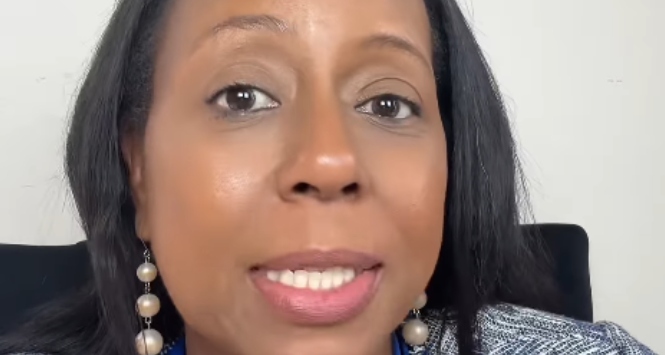
And according to attorney and commentator Danielle Bess, the strategy may be more powerful than many realize.
In a recent social media commentary, Bess argued that the CBC’s decision to send letters to more than 250 corporations urging them to defend Black voting rights is rooted in a long-standing principle of political influence: control of economic leverage points.
“You don’t have to be the biggest power in the room,” Bess said. “You have to control the chokepoint.”
Her remarks come as the CBC intensifies efforts to push back against redistricting plans in several Republican-led states following a recent Supreme Court decision that weakened key protections under the Voting Rights Act.
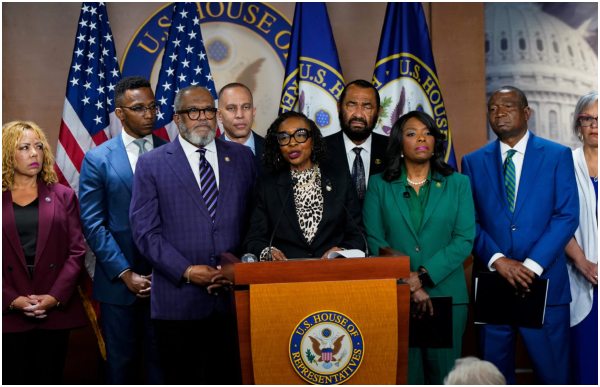
According to reporting by PBS, the caucus has asked hundreds of major corporations to publicly oppose efforts that could eliminate majority-Black congressional districts and dilute Black voting power.
CBC Puts Corporate America “On Notice”
The letter, sent to more than 250 companies, targets corporations that previously voiced support for racial equity and voting rights initiatives following the murder of George Floyd and the January 6 attack on the U.S. Capitol.
Among the companies contacted are major global brands that once backed the John Lewis Voting Rights Act through the Business for Voting Rights coalition.
“We are putting corporate America on notice,” CBC Chair Yvette Clarke said in comments reported by PBS.
The caucus argues that companies benefiting from Black consumers, workers, and communities should not remain silent while Black political representation faces renewed challenges.
The “Chokepoint” Theory

Bess compared the CBC’s strategy to the geopolitical influence Iran wields through the Strait of Hormuz, a critical passageway for global oil shipments.
While noting that Iran produces only a fraction of the world’s oil, she argued that its strategic position allows it to exert influence far beyond its size.
Applying that concept to domestic politics, Bess said Black consumers and workers represent a significant economic force capable of influencing corporate behavior.
“Black consumers, culture, and workers are a choke point that corporations depend on,” she said. “So corporate economic pressure that can be placed on red states and places where they are redistricting can be significant.”
According to Bess, corporations do not necessarily need to be persuaded by moral arguments alone. Economic considerations, she argued, can often be a more effective motivator.
“People who say these corporations probably don’t care about voting rights are probably correct,” she said. “But they don’t have to care. They just need to know that they can feel economic pain in order for them to act.”
Historical Roots in the Civil Rights Movement
Bess noted that economic pressure campaigns are not a new tactic. She pointed to the Civil Rights Movement, during which boycotts and coordinated economic actions were used to challenge segregation and discrimination.
Today, she argued, digital communication and social media provide organizers with tools that previous generations did not have.
“We can be even more effective today because we have the ability to organize and strategize nationwide,” Bess said. “We can talk to each other instantaneously.”
The CBC has recently signaled a willingness to expand its efforts beyond corporate outreach. The caucus has also encouraged athletes and other influential figures to consider economic actions in response to redistricting plans that could reduce Black representation in Congress.
A Defining Test for Corporate Commitments
The controversy arrives amid broader debates over diversity, equity, and inclusion programs, voting rights protections, and the role corporations should play in public policy disputes.
The CBC’s letter argues that many businesses that once championed racial equity now face a critical test of whether those commitments were based on enduring principles or temporary public pressure.
For Bess, the effectiveness of the campaign may ultimately depend less on public statements and more on whether companies perceive a tangible business risk.
“This is about power,” she suggested. “And understanding where that power truly lies.”
As redistricting battles continue to unfold across multiple states, the CBC’s strategy signals a growing effort to combine political advocacy with economic influence, a tactic supporters believe could shape the future of voting rights in America.