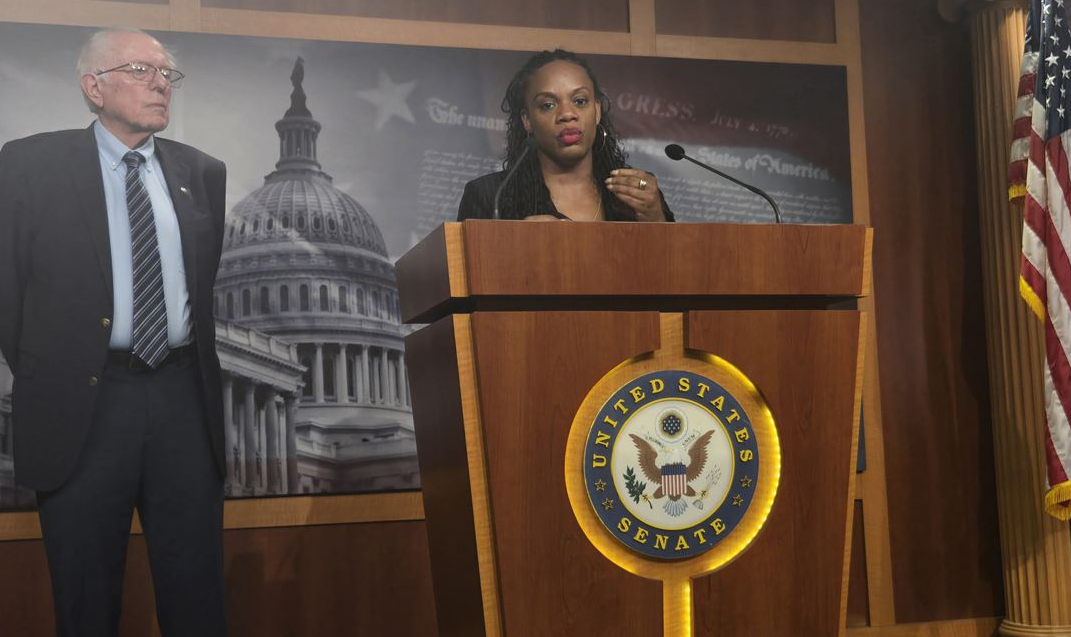
The explosive growth of super PAC spending in American elections is once again fueling a national debate over money in politics, with Democratic U.S. Rep. Summer Lee joining Sen. Bernie Sanders in a renewed effort to curb the influence of wealthy donors and so-called “dark money” groups.
In a recent report in the Pittsburg Post-Gazette, the push comes as outside spending continues to dominate federal races at historic levels. In Pennsylvania’s closely watched 2024 U.S. Senate contest, longtime Democratic Sen. Bob Casey Jr. initially outraised Republican challenger Dave McCormick, collecting $57 million compared to McCormick’s $34 million. But the financial advantage quickly disappeared once super PACs entered the race.
By Election Day, super PACs supporting McCormick had poured roughly $133 million into the campaign, far outpacing the $84 million spent by groups backing Casey. The race became a vivid example of how outside organizations, which can raise and spend unlimited sums, increasingly overshadow candidates’ own fundraising operations.
Lee and Sanders last week unveiled legislation that would cap donations to super PACs at $5,000 annually. While the proposal would not eliminate the groups entirely, supporters say it would limit the ability of billionaires and corporate interests to dominate elections through massive contributions.
“It is one of the most important issues that we can work on right now,” Lee said during a news conference announcing the bill. “If we don’t do something about big money in politics, we will have no democracy to fight for anymore.”
Critics of the current system argue that super PACs have become a major conduit for untraceable money in politics, allowing wealthy donors to exert enormous influence while avoiding public scrutiny. According to OpenSecrets, nearly three-quarters of all individual political donations in 2024 came from just 337 wealthy Americans.
Among the largest donors were tech billionaire Elon Musk, who reportedly spent nearly $300 million through super PACs supporting President Donald Trump, and investor Timothy Mellon, who contributed more than $200 million to outside groups.
Supporters of campaign finance reform say the surge in spending is eroding public trust in democracy. Sanders warned that many voters increasingly feel powerless in a political system dominated by the ultrawealthy.
But opponents of new restrictions argue that limiting political spending would violate free speech protections. David Keating, president of the Institute for Free Speech, called the proposal “an attack on our First Amendment rights.”
The debate reflects a dramatic transformation in American politics since a series of Supreme Court rulings beginning in 2010 cleared the way for unlimited independent political spending. Super PAC expenditures have since exploded from less than $500 million in 2010 to $4.5 billion during the 2024 election cycle, according to OpenSecrets.
Despite uncertain odds in Congress, Lee and Sanders’ legislation is expected to intensify scrutiny on the growing role of mega donors and outside spending groups in shaping modern elections.