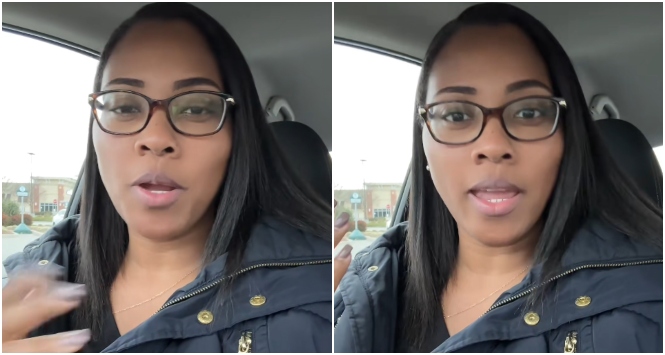
A worshipper says she quietly left last Sunday’s service after church leaders publicly praised conservative commentator Charlie Kirk following his killing — and then sat in her car, visibly shaken and questioning her faith.
The TikTok video from the woman identifying as @coleworlddmv captures an increasingly common and painful moment for many Americans following the unfortunate assassination of the controversial right-wing commentator.
The clip—part confession, part crisis of conscience—has resonated with people across social platforms who say they’ve felt the same collision of religion and politics in houses of worship.
“I had to walk out of church today over comments about Charlie Kirk,” she says in the video. “I’m on the verge of tears… I’m having such a conflict with my faith because I genuinely don’t understand how Christians are pushing this man as though hate didn’t come out of his mouth and heart on a consistent basis.”
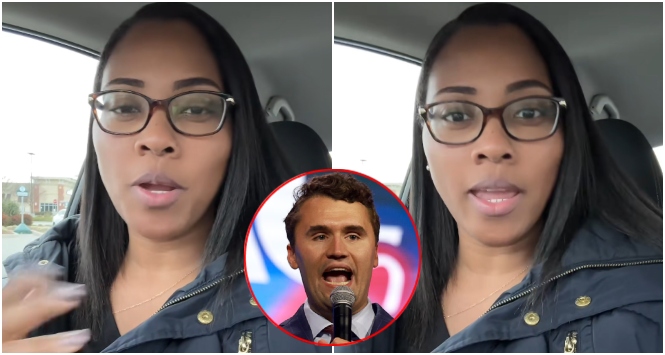
She said she listened as her pastor and other leaders framed Kirk’s wife’s remarks and the broader response as a call to empathy and sympathy. Instead, she left feeling betrayed and confused: “If this is the God we serve… do I want to be a part of it?” she asked in the parking lot.
A Personal Crisis That Reflects a Broader Tension
The video captures something many Americans are wrestling with right now: what role should houses of worship play in political and cultural crises? For this young worshipper, her pastor’s reaction to a polarizing public figure felt like an erasure of hurtful rhetoric she believes that figure promoted.
She told viewers she couldn’t reconcile being part of a congregation where leaders lauded someone she associates with “hate,” and lamented the prospect that the faith she grew up with might condone or excuse that speech. The moment prompted a raw question: “Is that what God thinks of me?”
Why This Matters Now
Religious communities are not immune to the nationwide debate that followed Kirk’s death. A debate that has included public grief, condemnation, heated online arguments, and, in some cases, punitive responses toward people who shared critical views.
For many congregants, how pastors and church leaders address such events reveals whether the church will be a sanctuary of compassion or a space that amplifies political divisions.
Commenters on the video have highlighted two recurring concerns:
(1) congregants who feel betrayed when spiritual leaders appear to prioritize public relations, political alliances, or ritualized responses over moral clarity; and
(2) Black worshippers and other marginalized members who worry their lived experiences of harm are being sidelined when a controversial figure is remembered without acknowledging the pain their words caused.
Voices on Both Sides
Some churchgoers argue clergy should offer space for mourning and pastoral care for grieving families, regardless of public disagreement with the deceased’s views.
Others insist spiritual leaders bear a responsibility to name and condemn rhetoric that dehumanizes or endangers groups of people.
This TikTok clip captures how quickly that tension can move from abstract debate to personal rupture, when a member walks out of service and re-evaluates not just a sermon, but the relationship between faith, leadership, and identity.
What She Said Next
In the video, she also called on viewers to think about leadership and accountability: what it means when those who “are supposed to be following” lead a congregation toward sympathy for someone whose politics many found harmful.
She concluded uncertainly, asking what to do next while trying to protect her spiritual integrity and sense of self-worth.
Broader Conversation
Religious leaders, scholars and congregants nationwide have been discussing how best to navigate these moments: offering pastoral care without whitewashing harm; holding space for grief while refusing to normalize hateful rhetoric; and ensuring that congregations remain places where marginalized members feel seen and safe.
For the woman in the parking lot, the moment was a crossroads.
For many watching, it was a mirror of a crisis of conscience, of the growing overlap between politics and pulpits, and of how individuals decide whether their faith community still reflects their core values.