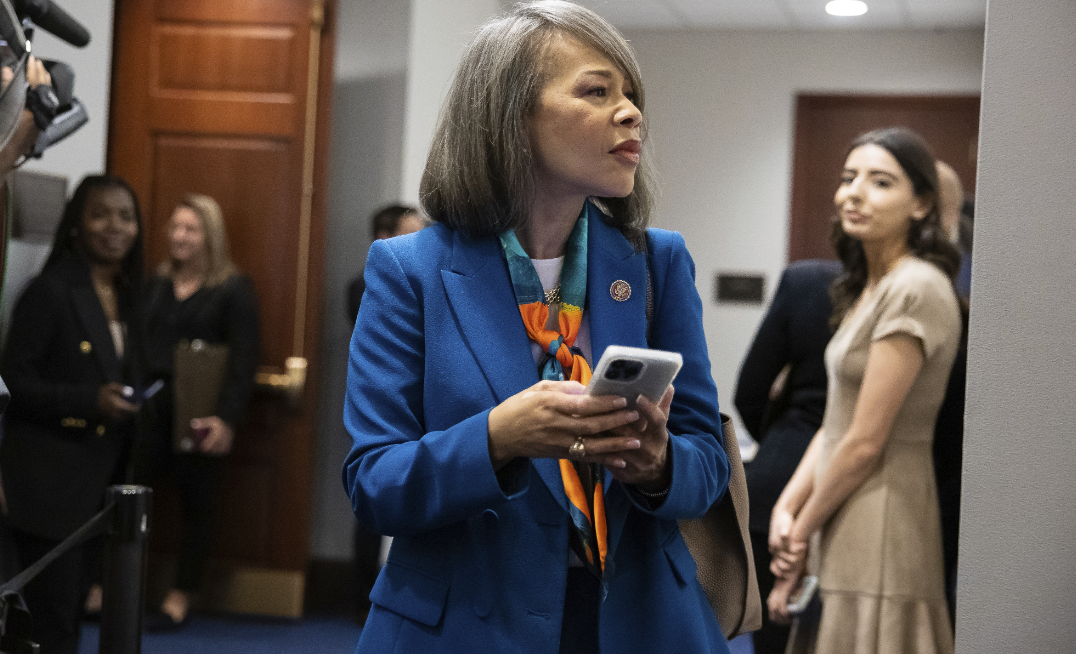
As artificial intelligence companies thrive in an industry-friendly Trump era, concerns about the technology’s disruptive impact on American workers continue to mount. New legislation introduced Wednesday by a trio of Senate Democrats aims to confront those fears head-on by requiring a sweeping federal review of how AI is reshaping the U.S. labor market — and how workers can be protected from being left behind.
The proposed Workforce of the Future Act, sponsored by Sens. Lisa Blunt Rochester (D-Del.), Mazie Hirono (D-Hawaii) and Adam Schiff (D-Calif.), would direct the secretaries of Labor, Commerce and Education to jointly study AI’s effects on the economy. The agencies would be tasked with identifying which industries and jobs are most vulnerable to disruption, how job quality may change, and what skills workers will need to remain competitive in a rapidly evolving marketplace.
Blunt Rochester, a former Delaware labor secretary, said the legislation builds on earlier Democratic efforts to address AI and employment and aims to ensure Americans can “access and maintain stable, good-paying jobs” as technological change accelerates. “Artificial intelligence is increasingly disrupting our economy, contributing to layoffs and occupational changes,” she said, adding that the bill would help the government act proactively to protect workers most affected.
A press release from the sponsors cited a recent MIT study estimating that AI could replace nearly 12% of the U.S. workforce. At the same time, many recent college graduates are reportedly struggling to find employment, underscoring the urgency of developing new training pipelines.
The bill would require the agencies’ final report to be delivered to Congress within one year of enactment and include an analysis of which demographic groups face the greatest risk from AI-driven downsizing. It would also recommend which educational institutions are best positioned to provide effective reskilling programs.
To back those recommendations with funding, the legislation authorizes $160 million in Department of Education grants for emerging and advanced technology education, including teacher training, high-quality learning materials, and expanded access for underrepresented groups. An additional $90 million in Department of Labor grants would support workforce training for professions most impacted by AI.
Schiff said federal leadership is essential as AI rapidly transforms the economy. “We must act now to gain a full understanding of the impact of AI on the workplace, so we can ensure access to good-paying jobs for the American people,” he said.
The bill has drawn endorsements from major AI firms such as Anthropic and OpenAI, as well as labor groups including the American Federation of Teachers, highlighting rare common ground between industry and organized labor as the AI revolution accelerates.